
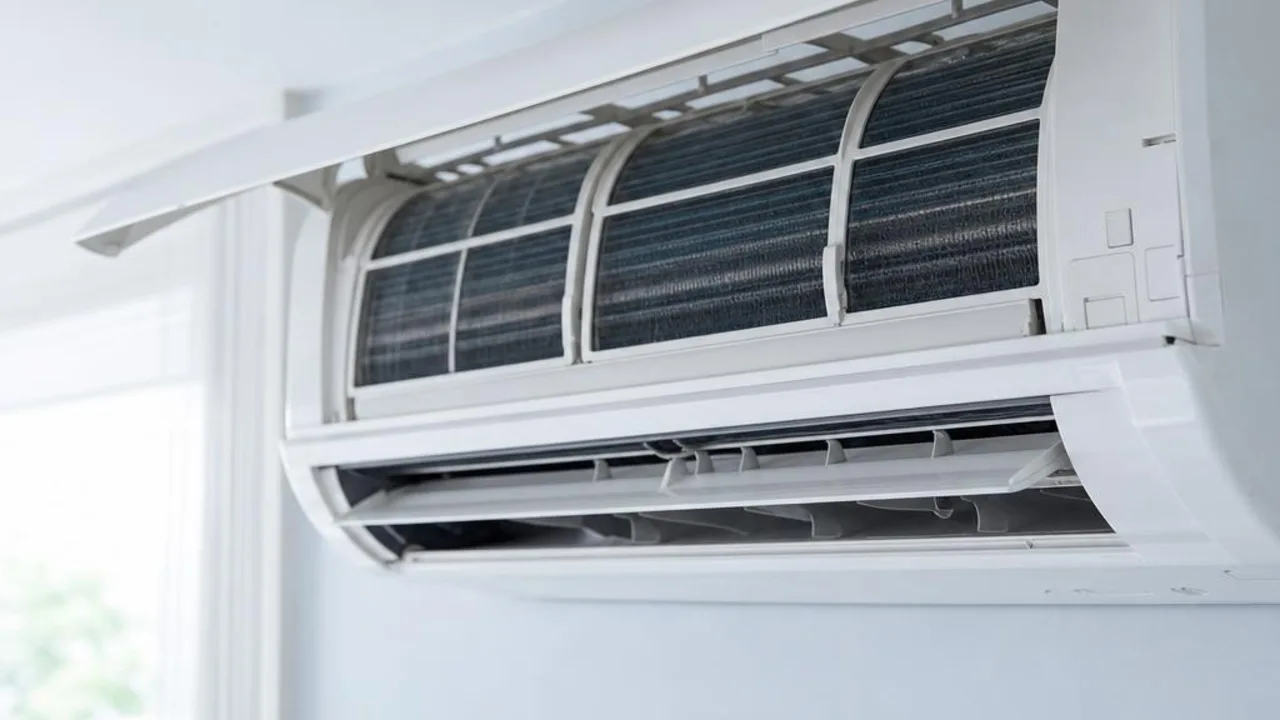
Before window-unit cleaning: support, access beside the window and removal assessment
Contents
For window-type air conditioner cleaning, first assess whether it can be safely removed, as well as the space by the window and the support condition; residents should not loosen the unit or bracket themselves. Prepare the model, indoor access route, installation location and existing fault so customer service can confirm the work arrangement.
First record the window and support condition.
Take photos of the visible unit, window frame and fixing points from a safe position. If there is looseness, obvious rust or a risk of falling, stop using it and arrange an inspection first. Do not lean out, shake the unit, or attempt a DIY repair of the bracket to judge whether it is secure.
Leave enough indoor access and moving space
Please describe the furniture in front of the AC, curtains, and the clear access space, and move any small items that can be safely relocated. If the property has restrictions on carrying or work hours, please state them before booking. Do not move a window-type AC out yourself just to make space.
Power location and the original fault
Provide the visible power supply location, and switch off any risky equipment according to the manual; residents should not disconnect wiring or modify sockets. Report leaking, weak cooling, unusual noise, tripping, and any previous repair work first; do not use cleaning as a substitute for fault inspection.
Whether dismantling the unit is first assessed by the service staff
The size, weight, fixing method and access position of the unit body will affect dismantling and cleaning arrangements. Do not remove the unit body or casing yourself, and do not loosen screws in advance to make it "easier to dismantle" for the service staff.
No need to pre-dismantle parts for cleaning.
Before service, there is no need to remove filters, blower wheels or other parts for soaking. Routine filter maintenance is only handled within a safe scope according to the model manual, and cannot replace a full-unit service arrangement.
Overhangs, canopies, metal gates or window-frame limitations of the unit body only need to be recorded from a safe position. Do not extend brushes, vacuum cleaners or hoses toward the outdoor area or into the unit for cleaning.
Do not blow internal dust with an air gun, and do not spray cleaner yourself. Electrical protection, drainage, and the cleaning method will be arranged by the service staff according to the site.
Completion check for restoration and outstanding items
Removal and reinstallation are handled by the service staff, and fixing and drainage arrangements should be confirmed according to the model; not all window units should be treated as if they must be level or set to the same tilt.
Check the actual scope of cleaning and additional works, and keep the service date and quotation. Residents should not loosen the casing or bracket to inspect again.
The staff will arrange the test run and restoration of the equipment; if dripping, abnormal noise, or other issues appear afterward, record them and follow up as agreed. If there is tripping or a burning smell, stop using the unit first.
Find professional help
Whether a window unit can be removed, whether high-level work is needed and whether extra works are required must be assessed first. Without site information, it cannot be guaranteed that every installation can be cleaned in the same way.
Cleaning can remove dirt within the confirmed scope, but it does not guarantee to improve all cooling problems or electricity bills. Pre-existing faults and separate repairs should be clearly distinguished when booking.
The most important part of window-unit cleaning is providing information and keeping space clear, not learning how to dismantle heavy equipment. Support, electrical work and internal unit work should be handled by suitable personnel; residents should not remove the unit themselves.
Related reading and services


Need professional help?
Need to know about Residential air conditioning service? First check the service scope and arrangements, then provide the model and site details for enquiry