
Water dripping from the drainage hole of a window unit: what residents can observe and what should be left to technicians
Contents
In the hot summer, window-type ACs are among the appliances used by many Hong Kong households. However, during the hottest months, many homeowners run into a troublesome problem—water dripping from the drain hole of the window unit, or even dripping along the exterior wall onto the canopy below. The "drip, drip" noise not only draws complaints from neighbours, but may also raise concerns for causing a public nuisance.
Window AC water leakage 4 major myths and hidden causes explained
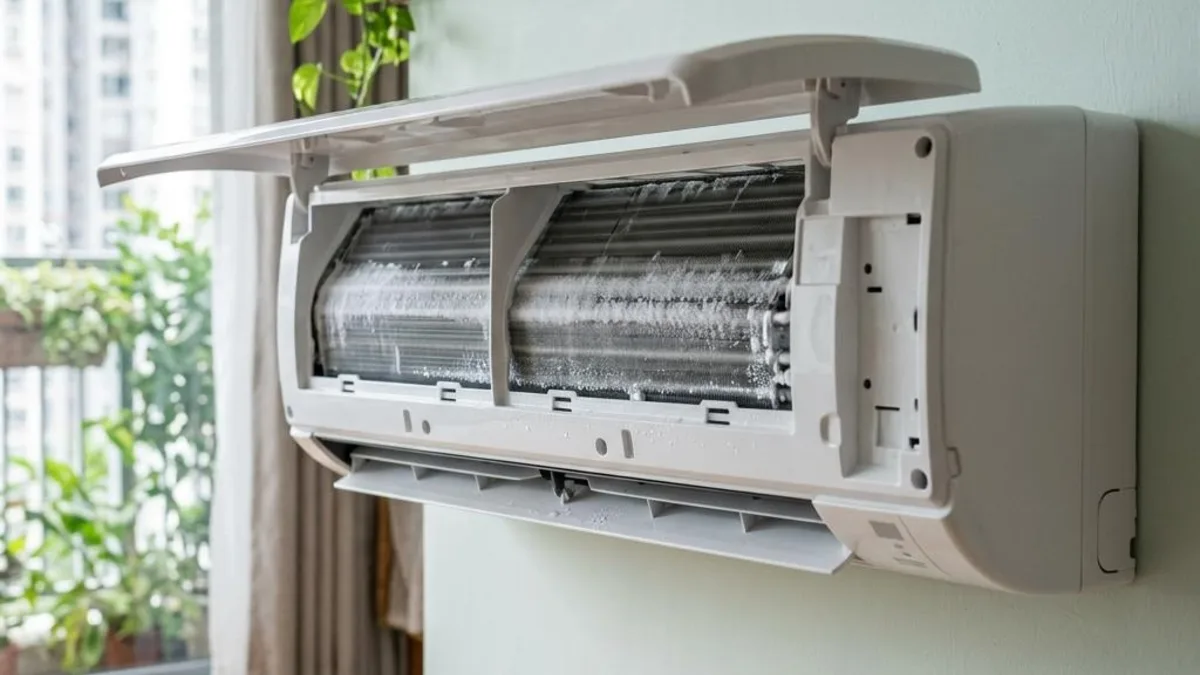
During cooling, moisture in the indoor air condenses on the evaporator (the indoor heat exchanger), then flows into the drain tray or other collection points according to the model design. Different window unit designs for water retention, fan blades and drainage accessories vary, so water at the bottom of the unit alone cannot be used to judge a fault.
Myth 1: Why does a newly installed window-type air conditioner still drip water, and how should installation conditions be checked?
- The unit position must be checked against the original installation instructions for that model. Level, slope, support and drainage requirements may differ, so a fixed front-higher-rear-lower angle cannot be applied universally. If displacement, a loose frame or deformation is suspected, stop using it safely first and arrange an inspection. Do not push the unit, loosen screws or adjust the support yourself.
Myth 2: Even with a drain pipe connected, why does water still overflow from the drain opening? (biofilm and moss blockage)
- How does biofilm form in the drain pan? Hong Kong's summer weather is extremely hot and humid. Condensate inside the air conditioner mixes with dust, skin flakes, grease and mould spores in the air. Over time, these impurities multiply around the drain pan and drain opening, forming a sticky biofilm and slime like jelly. Even if the drain opening is not very large, this adhesive gel-like matter can quickly block it completely and cause water to overflow.
Myth 3: Can the "water-throwing fan blade" at the bottom of a window-type unit fully replace a drain pipe?
- Some window units keep a certain amount of water in the base to help the outdoor fan blade disperse heat. Whether to connect a drain pipe, which accessories to use and when drainage is needed must follow the original manufacturer’s instructions and the site conditions. Do not drill, pull out plugs or alter the original design without authorisation.
Myth 4: The drain pipe is not blocked, but water seeps out from the seams of the unit? (aging drain tray or damaged insulation foam)
- Aged internal ducting and insulation: after years of use, the plastic drain pan in a window-type unit may develop fine cracks due to long-term temperature changes. In addition, if the insulating foam inside the unit (commonly called "snow paste") is damaged or falls off, the metal casing may condense moisture when it contacts cold air, causing "secondary condensation" (sweating). This dripping usually does not pass through the drain hole, but seeps directly from the bottom edges of the casing.
Safe observations and information residents can prepare
Residents may first shut down the equipment safely, protect the floor, and record the model, where dripping occurs and the time from a safe indoor position. Do not climb, stand on furniture or lean out of a window; if water is near electrical appliances, or if there is tripping or a burning smell, do not keep using it or test power yourself.
Observation 1: record the visible position only; do not measure or adjust the outdoor unit yourself
- You may take photos of the unit body, model and any visible dripping points from indoors. The support, external wall screws and installation angle should be checked by qualified personnel. There is no need to force photos of areas that are not clearly visible, and do not touch them with your hands.
Observation 2: record whether the drain pipe is visibly loose or flattened
- Only record the pipe condition visible from a safe indoor position; do not disconnect pipes, use tools to clear the drain hole, or lean in to inspect the back of the unit. Blockage, damage, connections and drainage direction must be further assessed by a technician.
If drain testing is needed, it will be handled by the technician.
- If testing of the drain pan or internal drainage is required, it must be handled according to the model, safety isolation and circuit protection requirements. Residents should not pour water into the collection tray, spray water or pry holes themselves, and should not assume that no dripping means all faults have been eliminated.
A Comparison of AC Dripping Solutions
First separate safety checks, installation checks and cleaning repairs: observation can only provide clues. You cannot use star ratings or a fixed effectiveness period to judge which method suits every window unit.
Safe observation by residents: after stopping use, record the model, where dripping occurs and the time; do not involve dismantling, reaching into the drain opening or exterior wall work.
Installation inspection: A suitable person should check the location, support and drainage arrangements according to the manufacturer’s requirements. Residents should not move the unit or adjust its slope themselves.
Cleaning or repair: first identify whether the issue is dirt buildup, a blocked drain pan, damaged piping, insulation or installation problems; if cleaning, parts replacement or other drainage treatment is needed, the quotation must be confirmed separately based on the actual scope, and deep cleaning cannot replace all repairs.
Why are DIY methods limited?
Appearance alone can only provide clues; it cannot confirm the depth of the blockage, the condition of the drain pan, or whether the installation is suitable. Do not assume the problem is fixed just because it is not dripping for the moment, and do not keep forcing the pipe with tools.
1. The internal structure is compact, and dead spots cannot be reached
The internal space of a window unit is very tight. Most of the drain pan is covered by the evaporator coil and the squirrel-cage fan blade. Ordinary DIY tools can only reach the outer end of the drain opening and cannot thoroughly remove the sticky biofilm and dirt hidden deep inside the unit.
2. Continuous dust and mould growth can cause "secondary blockage"
If dirt remains inside the unit or at the hose connection, treating only the outlet may not solve the source. When dripping happens repeatedly, the cause should be checked again. Do not assume it will definitely block again within a few days, and do not blame all problems on insufficient cleaning.
3. Working at height is highly dangerous
A window unit is heavy, and its weight and support method depend on the model. Residents should not lean out of the window, climb up, loosen the bracket or move the unit out themselves. Even a slight movement can cause injury or falling objects.
Seek help from a professional team
Enquire about TimesProvide the unit model, water dripping location, when the problem started, and any existing fault so the technician can judge whether inspection, cleaning, or repair is needed. The feasibility and charges for outdoor access, removing the unit, and extra drainage work must be confirmed based on the on-site assessment; cleaning alone is not guaranteed to solve all problems.
Related reading and services
- Related service scope and current charges
- Back to AC encyclopedia
- FEHD: Inspect and maintain air conditioners to avoid dripping water nuisance
Need professional help?
Need to know about AC repair service? First check the service scope and arrangements, then provide the model and site details for enquiry