
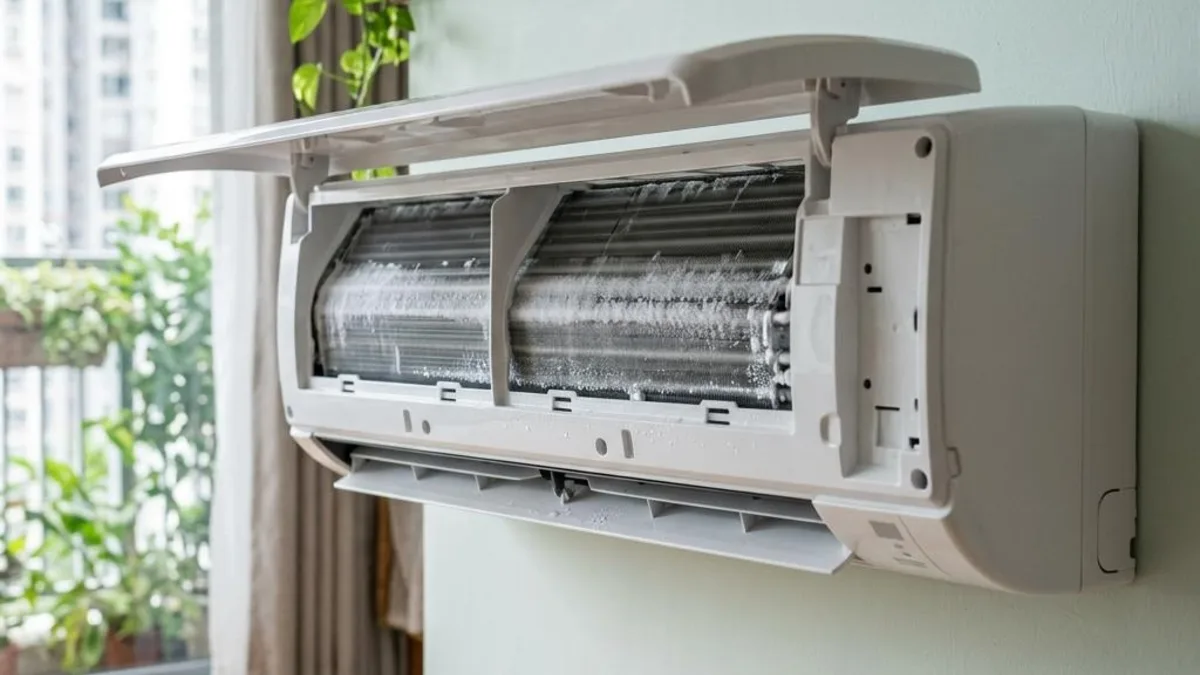
What to do if your air conditioner ices up? Common causes and safe handling methods
Contents
If ice forms during cooling, airflow becomes noticeably weaker, or water drips after the ice melts, stop cooling first. Do not lower the temperature further or repeatedly turn the unit on and off to test it; melting ice does not mean the cause of icing has been solved.
If you see icing, stop cooling first
Do not chip away ice, and do not use hot water, a hair dryer, or any other heat source to speed up melting. Watch whether the meltwater is near sockets, wiring, or appliances. If electrical parts are wet, or there is a burnt smell, smoke, or a tripped breaker, stop using the equipment, do not touch wet switches, and arrange for a qualified person to handle it.
Some models can use the fan mode to help defrost, provided it is safe and in line with the manufacturer's instructions, but not all models are suitable. If there is any electrical abnormality, do not keep the unit running just to defrost it.
Why does the indoor unit freeze up?
Blocked airflow
During cooling, the indoor evaporator needs enough air flowing through it to absorb indoor heat. A blocked dust filter, obstructed air inlet or outlet, or dirt on the evaporator can affect heat exchange and cause icing. This does not mean all icing problems can be solved by cleaning.
Fan or control abnormality
A problem with the indoor fan speed or control may also lead to insufficient airflow through the evaporator. Do not reach in or use tools to spin the fan, and do not dismantle the unit yourself to test the control board or capacitor.
Refrigerant or cooling system fault
System issues such as refrigerant leaks may cause the evaporator to freeze, but ice alone does not mean it “needs refrigerant.” Whether there is a leak, whether repair is needed, and how it should be handled must be checked by a professional. Do not add, mix or vent refrigerant yourself.
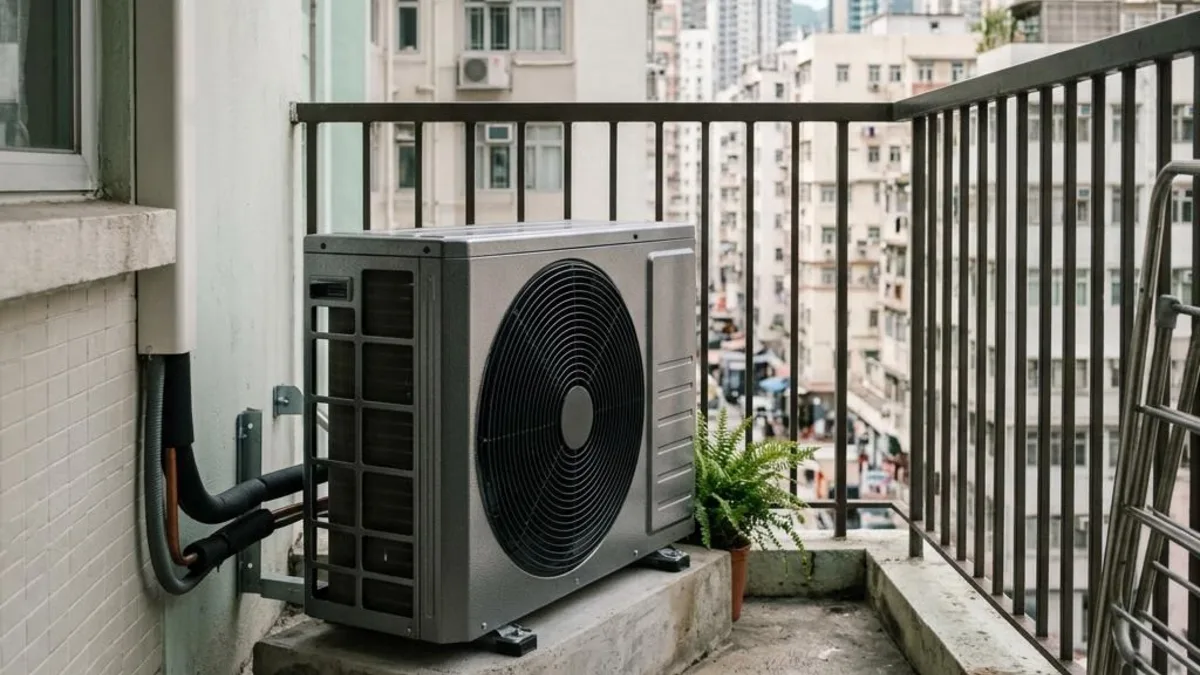
This article mainly explains icing of the indoor unit during cooling mode. For heat-cool units, frost and defrost on the outdoor unit during heating is a different operating situation and should be judged separately according to the actual mode and model.
What can users safely record?
- Record the model, operating mode and the time the fault occurs
- Take photos of ice buildup, water dripping and any displayed error code from a safe position; do not lean out of the window to take pictures
- Do not open the unit just to check whether the air inlet or outlet is blocked by objects
- Only handle the removable dust filter when permitted by the manufacturer’s instructions and when it can be safely powered off and easily accessed; reinstall only after it is completely dry
The time needed to defrost depends on the amount of ice and the environment, so there is no fixed duration that applies to all models. If ice forms again, airflow remains weak, or other abnormalities occur, arrange an inspection instead of repeatedly restarting the unit.
Need cleaning or repair
When dirt buildup or restricted airflow is present, cleaning may be part of the work. If the issue involves the fan, controls or refrigerant system, a repair assessment is needed. Before inspection, it cannot be guaranteed that one cleaning will solve it, and one should not rely on articles alone to diagnose the part.
If you need an on-site inspection in Hong Kong, please provide your district, model, icing location and photos for enquiryAir conditioning repair and fault inspection. For the cleaning scope, seeResidential AC cleaning service; the date, scope, and quotation are confirmed by customer service; same-day or 24-hour arrival is not guaranteed.
Reference sources and applicable scope
This article provides a preliminary guide only and does not replace an on-site diagnosis. Original manufacturer functions and operation apply only to the corresponding model; please refer to your own unit's manual. For fixed electrical installations, inspection should be arranged by a registered electrical contractor.

Need professional help?
Need to know about AC repair service? First check the service scope and arrangements, then provide the model and site details for enquiry