
How to check water dripping from the bottom of the air conditioner
Contents
Hong Kong is humid in summer, and AC dripping is a common problem. Dripping water may wet the floor or wall. Observing the unit early and finding the cause can prevent the problem from getting worse. This article explains step by step how to check why an AC is dripping, whether cleaning can solve it or whether professional inspection is needed, so your home stays dry.
First observe where and when the dripping occurs.
The first step in the inspection is to record the exact location and timing pattern of the dripping.
- Water dripping from the indoor unit front panel or air outlet -> usually related to a blocked drain pan or condensate channel.
- Water dripping along the bottom or casing of the AC unit -> often caused by a blocked drain pipe, loose connection or installation tilt.
- Water only starts dripping a few hours after switching on, or after switching off -> the evaporator may have frozen and then melted, with drainage unable to keep up.
It is recommended to take photos of the dripping location and time with your phone. This information helps narrow down the issue and makes it easier to describe the problem to the technician later.
Inspect whether the drain pan and drain pipe are blocked
The drip tray and drain pipe are key channels for AC drainage. Hong Kong's humid air makes it easy for dust, mould, algae and even small insect carcasses to build up inside the drain pipe, causing blockages.
Inspection method:
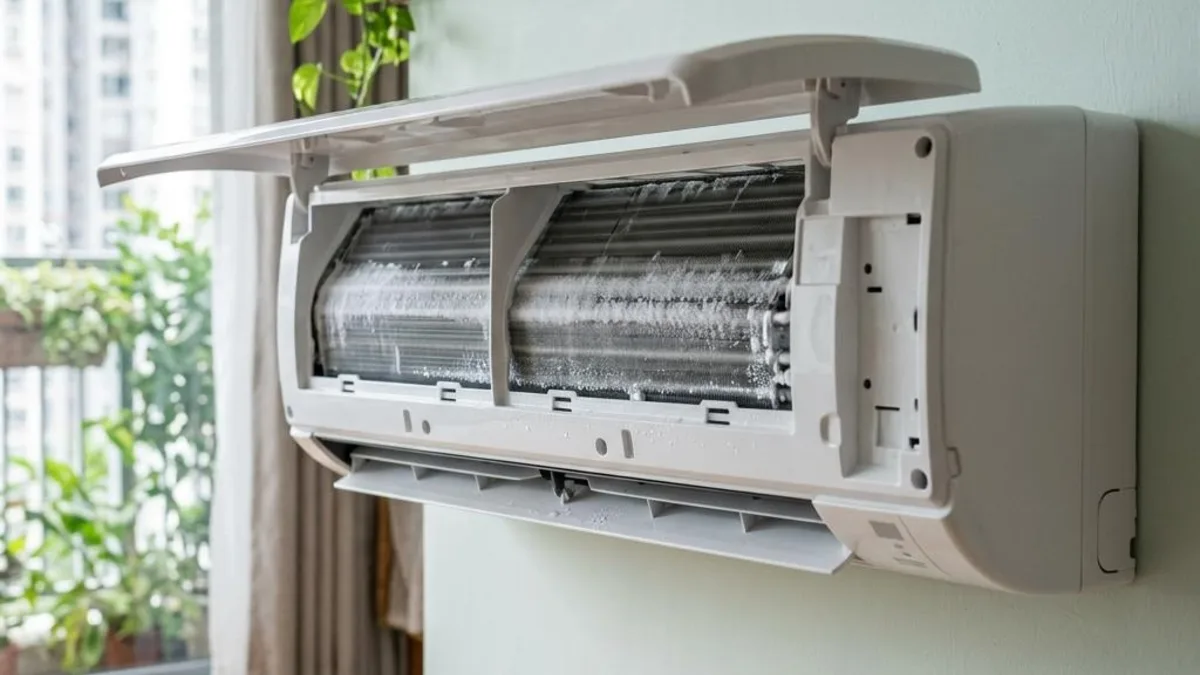
- Remove the indoor unit front panel and check whether the drain tray has standing water or dirt.
- Gently open the drain pipe outlet (usually at the lower right or the back of the unit) and check whether water flows out smoothly.
- Use a long flexible hose or a dedicated drain-pipe cleaning tool to slowly pour clean water into the indoor unit drain outlet and check whether the outlet is clear.
If water drains slowly or does not drain at all, it means there is a blockage. For minor cases, soaking with diluted white vinegar or a dedicated drain cleaner may help; for severe blockages, it is recommended that a professional use a high-pressure water jet or vacuum equipment to clear it, so as to avoid damaging the pipe.
Confirm the installation angle and refrigerant pressure
An uneven installation is another common cause of water dripping. If the indoor unit tilts forward or backward, water in the drain pan cannot flow smoothly to the drain outlet, and it may overflow from the gaps in the unit.
Inspection method:
- Place a spirit level on top of the indoor unit to confirm it is completely level (forward tilt is most likely to cause dripping).
- Check whether the gap between the unit and the wall is even.
In addition, if there is too little or too much refrigerant, the evaporator may frost heavily, causing excess meltwater and dripping. This kind of problem cannot be judged by yourself; professional instruments are needed to measure refrigerant pressure, and it falls within the scope that must be handled by a licensed technician.
Watch for other potential factors
Some cases of water dripping are related to usage habits or the environment:
- Setting the temperature too low with too weak a fan speed can easily cause frost and dripping.
- Clutter around the outdoor unit blocks heat dissipation, causing abnormal system pressure and may also indirectly lead to water dripping.
- Older units that have not been cleaned for a long time have aged internal parts, and dripping problems will be more frequent.
Air conditioner dripping is often caused by dust buildup, blocked drainage, or installation angle issues. With the steps above, most homeowners can make an initial assessment of the cause. If it is only the filter or a minor blockage, cleaning may solve the problem. But if it involves the installation structure or an internal component failure, a professional team should be contacted for inspection and repair. Good maintenance habits, such as cleaning the filter every 1–3 months and arranging regular professional inspections, help maintain cooling efficiency.
Related reading and services
Want to arrange AC cleaning or maintenance?
OPOExpert Air Conditioning provides residential and commercial AC cleaning and maintenance with clear pricing. Enquiry first or book online directly