
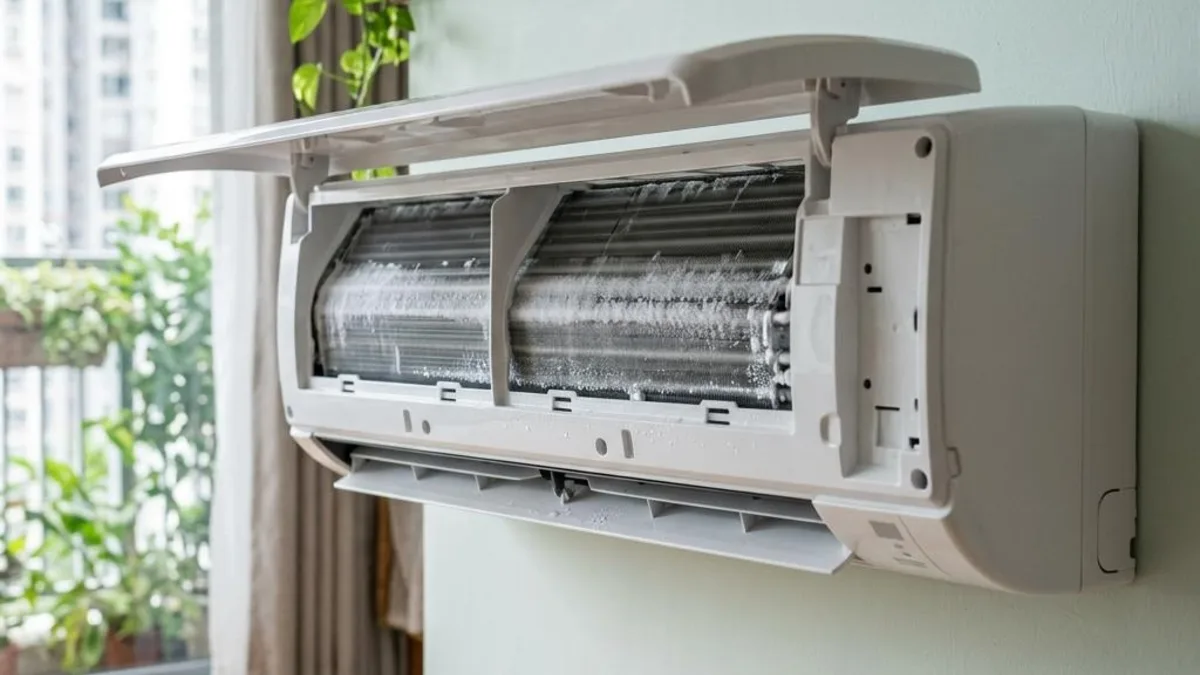
Is dripping from the air outlet a sign that the AC needs cleaning, or is the insulation cotton aged? Simple way to tell
Contents
Dripping from the air outlet is not necessarily a choice between 'the unit needs cleaning' and 'the insulation cotton has aged'. Surface condensation, drainage, icing, installation or insulation may all be involved; location and timing are for inspection reference only and appearance alone cannot confirm the cause.
Observe the visual pattern of the drip point and the distribution of water droplets
You may record water droplets appearing on the casing surface, seams or specific corners, but these locations alone cannot distinguish insulation, drainage and icing problems. Do not dismantle the casing to look for the source of water; if it is near a socket or electrical parts, stop using the unit first and arrange an inspection.
Check whether the fan speed and airflow at the air outlet fluctuate
Weaker airflow or airflow that becomes strong and weak may involve dirt build-up, mode settings, or fan control, and cannot be taken as proof of mould, excessive condensation, or drainage blockage. Record the symptoms together for inspection, and even without airflow problems, a leakage fault cannot be ruled out.
Watch whether the cool air being blown out comes with mouldy smells or other odours
Odour and visible stains need to be traced to their source, but they do not confirm the type of bacteria, the depth of contamination or which drain pipe is blocked. Insulation and drainage problems may also exist at the same time, and the absence of a musty smell is not proof that there is no issue.
Compare the air conditioner’s years of use and maintenance record
The age of the air conditioner is also an important reference indicator. Insulation material, as a consumable, is usually subjected to long-term temperature changes between hot and cold conditions and may take several years or even longer to harden, become brittle, or lose its insulating performance. If the air conditioner at home was installed recently or is still relatively new, water dripping is more likely to be related to the drain pipe slope at installation or dust buildup from daily use, and the chance of the insulation material ageing so quickly is relatively low. On the other hand, if the air conditioner has been used for many years and the pipe insulation has never been replaced, condensation problems caused by ageing insulation should be considered.
Impact of integrated testing and timely handling on maintaining performance
Do not try to confirm whether dripping has been fixed by increasing fan speed or setting the temperature to 25 to 26 degrees. Stop using it first, safely record the location and conditions when it happened, then arrange an inspection. In particular, if there is icing, water leakage near electrical parts, or unusual noise, do not keep it running to observe.
Seek help from a professional team
The causes of water dripping from the air outlet can be complicated, involving the internal air duct structure and the sealing condition of concealed piping. Dismantling the casing yourself for inspection may easily cause damage. Choose a professional team for suitable cleaning or inspection solutions to restore comfort and dryness at home.
Related reading and services
Need professional help?
Need to know about Residential air conditioning service? First check the service scope and arrangements, then provide the model and site details for enquiry