
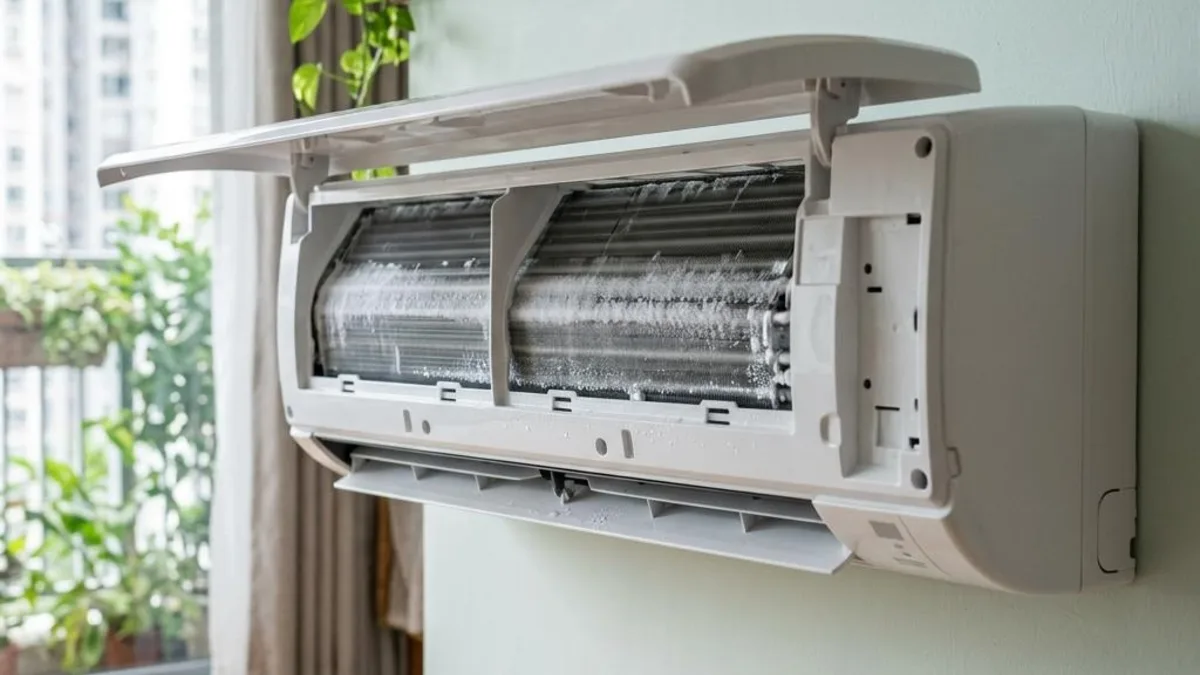
AC dripping: signs to look for
Contents
Hong Kong's weather is humid and AC use is frequent, so dripping water is not uncommon. Sometimes the AC still blows normally and the room is still cool enough, but water droplets start appearing around the unit, the outlet or near the wall, which may be a sign that the AC's condition has changed. Dripping water does not always mean a fault, but if it continues, it is worth paying attention early to avoid water stains affecting the wall, floor or nearby furniture.
Water droplets at the air outlet
Water droplets appearing near the air outlet are often the first thing people notice. This may be related to high indoor humidity, a large temperature difference at the outlet, dust build-up near the outlet, or condensation water not draining properly. Humidity is higher in Hong Kong during spring and summer, so condensation is more likely when the air conditioner is running. If there is more dust inside the unit, moisture may also linger more easily. If only a small amount of droplets appears for a short time, you can observe the situation first; if the droplets increase or begin to drip onto the floor, do not ignore it for long.
Weak airflow
Weaker airflow can also be an easily overlooked sign before dripping occurs. When dust builds up around the filter, blower wheel or evaporator, airflow may be obstructed, and condensation water inside the unit may be less able to drain normally. This may not lead to dripping immediately, but if cleaning is neglected for a long time, moisture and dirt inside the unit may accumulate and the risk of dripping may increase. If the air conditioner no longer feels as cool as before, or takes longer to lower the temperature, check the filter and outlet condition first.
Water marks near the unit body
Some dripping problems may not start by dripping directly onto the floor. Instead, water marks may appear on the side of the unit, the wall, the window ledge, or the bottom of the air conditioner. If these areas stay damp for a long time, they may cause paint to blister, mould to grow on the wall, or wooden furniture to become damp. When cleaning the room, check whether the area under and near the air conditioner has discolouration, water marks, or a mouldy smell. If water marks keep reappearing, the drain outlet, drain pipe, or internal cleanliness may need to be checked.
AC has a mouldy or damp smell
AC dripping is sometimes accompanied by odour. When there is more moisture inside the unit, and dust, skin flakes and dirt remain there for a long time, a musty or damp smell may develop. This smell is usually more noticeable when the unit is first turned on, and then may gradually fade. A smell does not necessarily mean dripping will happen soon, but if weak airflow, water droplets or a damp casing also appear, it is worth paying closer attention to whether the inside of the AC needs cleaning.
The drain outlet may be blocked
An air conditioner creates condensation while running, and under normal conditions this water is drained away through the drainage outlet. If there is dirt, dust, or blockage near the drain, water tray, or drain pipe, water may flow back or leak from other places. This is more likely to happen in air conditioners that have not been cleaned for a long time. If the dripping is near the bottom of the unit, the wall, or the drain pipe, the drainage system may need to be checked for smooth flow.
Installation location and tilt angle also have an impact
AC dripping is not only related to cleaning; it may also be affected by the installation location. If the AC installation angle, drainage direction or piping route is not ideal, condensate may not drain properly. This may not happen every time the unit is turned on, but when humidity is high, the AC runs for a long time, or the load is heavy, dripping may become more noticeable. If dripping appears after a newly installed AC or after recent repair or relocation, pay attention to whether it is related to the installation or pipe arrangement.
High room humidity makes the situation more obvious
In Hong Kong’s humid weather, an air conditioner needs to cool the room and remove moisture from the air at the same time. If the room humidity is high, for example after mopping the floor, after showering with the air conditioner on, or when windows have been open for a long time, the amount of condensate produced may increase. If the air conditioner itself is not very clean, or the drainage path is not smooth enough, dripping may occur more easily. Keep the room ventilated in daily use and avoid running the air conditioner for long periods in an overly humid environment.
Routine maintenance can reduce the build-up of problems
You can clean the filter regularly and check whether there are black spots, dust, or water droplets near the air outlet. Clutter should not be left around the air conditioner for long periods, as it may affect airflow and heat dissipation. If you notice water marks, a musty smell, weak airflow, or increased noise, you can arrange an inspection first — you do not need to wait until obvious dripping starts. Routine maintenance may not completely prevent all problems, but it helps reduce dust and moisture buildup.
Seek help from a professional team
If the air conditioner continues to drip, or if there is also odour, weak airflow, water stains or louder noise, it is recommended to seek help from a professional team for inspection. Dripping does not necessarily mean the unit is faulty, but the underlying cause may involve dust accumulation, poor drainage, installation angle or ambient humidity. Early inspection and proper cleaning can help prevent the problem from getting worse.
Related reading and services
Need professional help?
Need to know about AC repair service? First check the service scope and arrangements, then provide the model and site details for enquiry