

Power Off Before Cleaning the AC: The Difference Between Remote Shutdown and Safe Isolation
Contents
Before cleaning begins, stop operation and safely cut off the power according to the instructions for your model. Turning it off with the remote does not mean the unit is isolated from the power supply; disconnecting power also does not mean an ordinary household user can dismantle all parts themselves.
Why is switching off with the remote control not enough?
Even in standby mode, some internal circuits may still be powered. If cleaning involves water, a damp cloth, or contact with internal parts, do not assume the indicator light being off means the power has been fully isolated.
Plug-in equipment should be handled according to the manufacturer’s instructions, with the plug dealt with only when your hands and the surrounding area are dry, safe and easily accessible. If the wiring is fixed or the isolation point is unclear, leave it to qualified personnel to confirm; do not open the switch box, cut wires or measure electricity yourself.
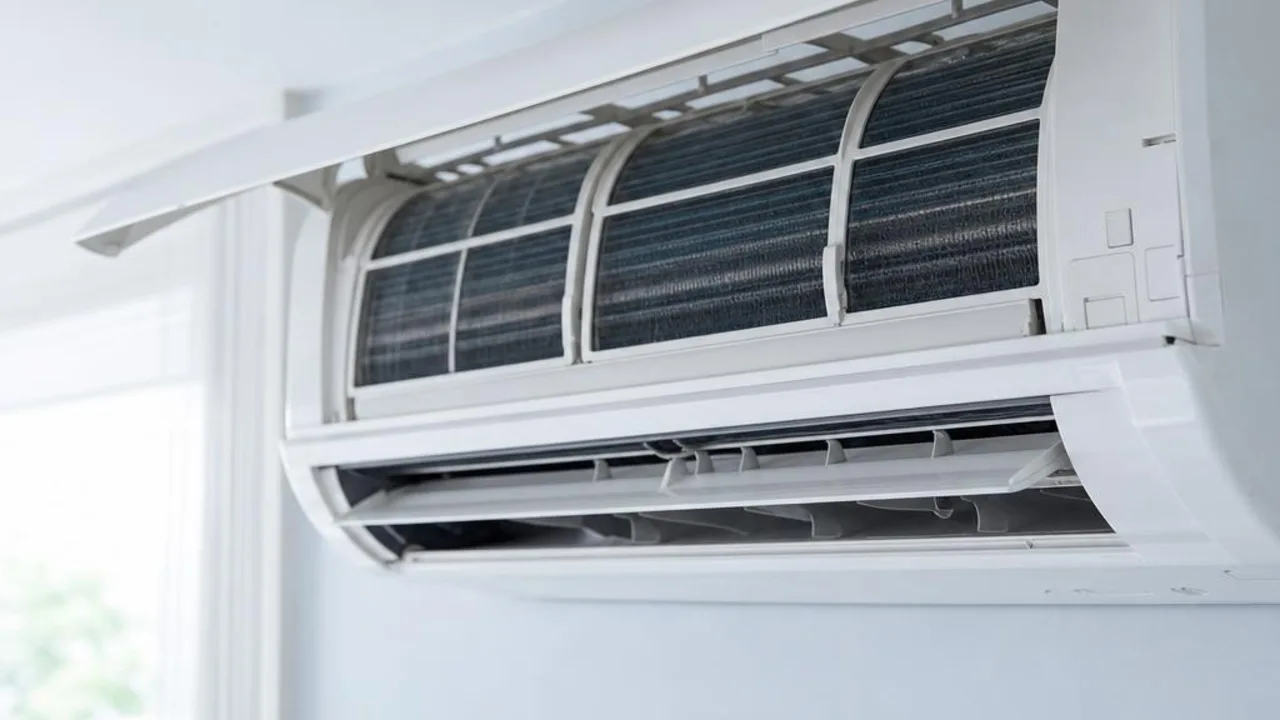
Please also check the instructions for any removable dust filter.
First confirm whether the filter can be washed with water, and clean it only in the way allowed by the manual, reinstalling it only after it is fully dry. Antibacterial, deodorising or special-coated filters may not be washable, so they should not be cleaned with a one-size-fits-all method.
Cleaning frequency should be adjusted according to the model, amount of dust, operating time and environment. Do not treat every two weeks or once a year as a mandatory rule for all equipment.
What risks remain after power is off
There may be residual charge inside, sharp heat sink fins, heavy units and risks when working at height. Gloves or goggles cannot replace electrical isolation, professional skill or suitable work equipment.
Do not dismantle the electrical box, replace wiring, measure the capacitor, add refrigerant, or lean out to clean the outdoor unit yourself. You can record visible damage from a safe position, then arrange inspection.
Cleaning Agents, Drainage and Waterproof Protection
Use methods that are marked as compatible with the equipment and cleaning products; do not mix different cleaners, and do not spray water directly onto the control board, sockets, or electrical connections. Clearing a drain also does not mean forcing high-pressure water into the pipe at random.
Professional cleaning should first assess the equipment, power supply, drainage, and site protection. After cleaning, reassembly and inspection should be carried out according to the applicable procedures; you should not assume the unit can be re-energized simply because the outer casing looks dry.
Stop using the unit first if these situations occur
If there is a burning smell, smoke, abnormal vibration, repeated tripping, or wet electrical parts, stop using the equipment and do not keep restarting it or switching it back on to test it; do not touch wet plugs or switches.
For cleaning enquiries, please provide the brand and model, unit location, power supply, and drainage condition. If there is an electrical fault, we will arrange the appropriate inspection first; general cleaning should not be treated as a repair.
Related reading and services
Reference sources and applicable scope
This article provides a preliminary guide only and does not replace an on-site diagnosis. Original manufacturer functions and operation apply only to the corresponding model; please refer to your own unit's manual. For fixed electrical installations, inspection should be arranged by a registered electrical contractor.
Need professional help?
Need to know about Residential air conditioning service? First check the service scope and arrangements, then provide the model and site details for enquiry