
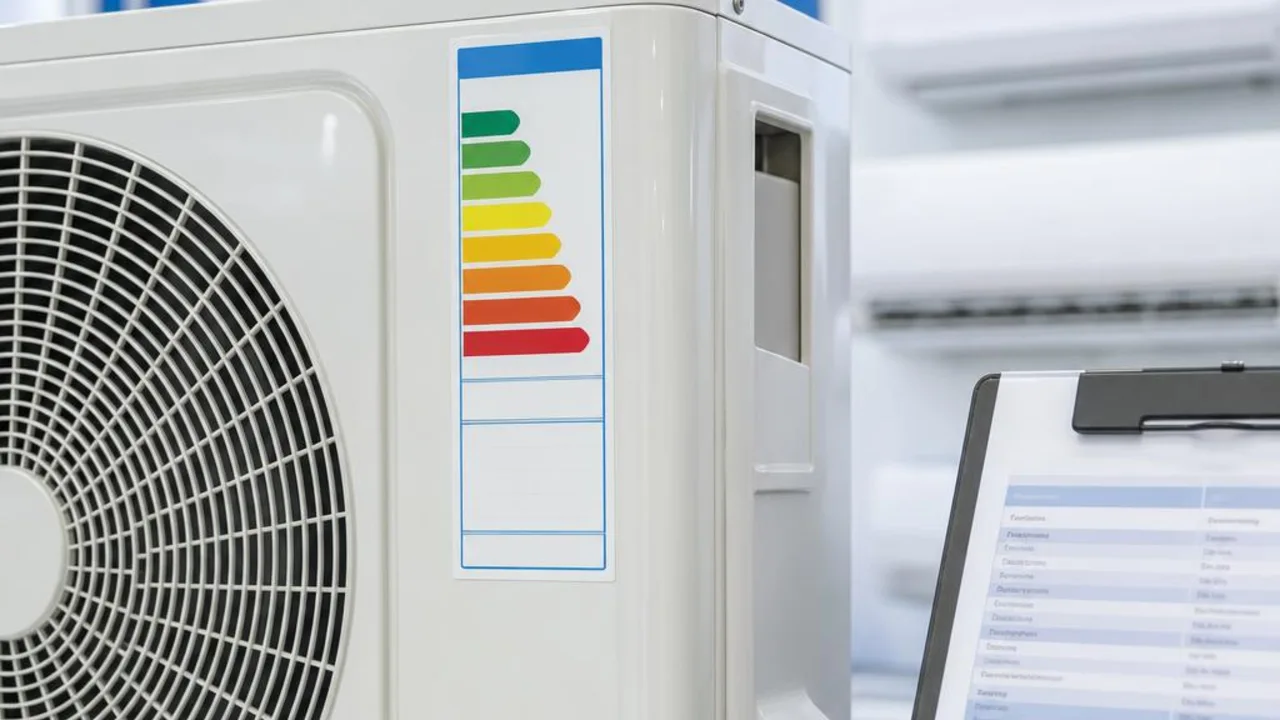
[AC Maintenance Guide] How dust buildup affects performance and how maintenance compares
Contents
You cannot judge the level of dirt buildup in an air conditioner simply by saying it has not been cleaned for two or three years, and you also cannot directly convert that into electricity use or damage risk. Maintenance should be arranged based on actual usage, dust buildup, airflow, and original manufacturer requirements. If there is an abnormality, check the cause first.
Which parts can dirt buildup affect
Checking airflow and heat exchange helps identify the issue, but the internal condition cannot be inferred from the time since the last cleaning. The following are possible factors, and they do not necessarily happen in every unit.
- Dirt on the heat exchanger may affect heat transfer, but the actual extent must be checked. Do not estimate a sharp drop in efficiency or a fixed increase in electricity bills from appearance alone.
- Dust build-up on the fan wheel may affect airflow, but without measurement you cannot say it is only half of a new unit. Residents should not remove the outlet cover or insert tools into the unit.
- Dirt buildup may affect airflow, heat exchange and operating time, but control methods depend on the model. It does not mean the compressor must always run at the highest frequency, and it is not the direct cause of every increase in electricity bills.
The number of years without cleaning cannot be converted into a fixed electricity-use increase
Daily use, environment, and maintenance vary, so no universal airflow or electricity-saving percentage can be given for every unit that has not been cleaned for a year.
- Even if it has not been cleaned for the same one-year period, the actual level of dirt buildup can still differ. Observe abnormalities from a safe position, and follow the manual for filter maintenance.
- Even if no deep cleaning has been done for two or three years, the condition of the unit still needs to be checked; it does not mean that a certain type of scale film has formed or that water leakage is certain.
- An assessment can be arranged if there has been no inspection for a long time, but cleaning cannot guarantee a longer service life, and existing faults need separate diagnosis.
Assess the best time to clean your air conditioner: when is cleaning most cost-effective?
Deal with faults first; do not wait until it is not cold enough or starts dripping. Routine cleaning should be arranged according to actual need and the manufacturer's requirements, and there is no guaranteed month for maximum energy saving.
The time slot is arranged according to actual needs and scheduling
- The appointment date and fee will be confirmed according to the actual schedule and quotation; do not write summer surcharges as the policy of all companies.
- Before increasing use, you may check the unit condition first, but this does not guarantee the unit will stay at peak efficiency or save a fixed amount for the whole season after cleaning.
- Whether to clean before shutdown or before restarting depends on the unit condition and usage needs; the month alone cannot guarantee there is no mould.
The following faults need to be investigated; cleaning alone may not solve them.
Changes in airflow, cooling, odour, dripping, and power use can be clues for inspection, but they cannot by themselves confirm that internal dirt has reached a critical point.
- Airflow has dropped sharply: even with the fan speed set to maximum, the air coming out is still weak and powerless.
- AC temperature stays high: the setting is 22°C, but even after running for a long time, the indoor thermometer still remains above 26°C.
- Musty or sour smell from the air outlet: 10 minutes before switching on, a strong old-musty smell or sour odour is noticeable.
- Indoor dripping or spraying may involve drainage, condensation, or other faults. If water is near electrical parts, stop using the unit and do not pressure-wash it yourself.
- Electricity bill suddenly unusually high: without any change in usage habits, the bill has risen significantly compared with the same period last year.
Compare services by the actual parts and methods
Filter maintenance, internal cleaning, dismantling and repair should be clearly separated in scope; there are no star ratings, cleanliness percentages or full-restoration claims without testing and conditions, and these should not be used as selection criteria.
3 daily maintenance habits to improve AC energy efficiency
To keep your AC running efficiently for the long term after cleaning, you can follow these three low-cost habits:
- Maintain the user-serviceable filter according to the manufacturer’s instructions and the level of dust. First confirm whether it can be washed; do not apply a two-to-four-week rinse schedule to all filter materials.
- Shutdown and drying procedures should follow the model manual; fan mode for 15 to 30 minutes cannot guarantee the inside is completely dry or mould-free.
- Use with a circulating fan: place the fan below the AC outlet and aim it toward the centre of the room or slightly upward. This can speed up cold air circulation, help the room reach the set temperature faster, and reduce the compressor load.
Maintenance should be arranged according to the actual condition of the unit and kept separate from fault inspections; it should not be marketed by promising to recover a specific electricity bill amount or health benefit.
Seek help from a professional team
Enquire about TimesProvide the model, airflow, odour, and water leakage situation so the service area, protection, testing, and quotation can be confirmed; no guarantee that cleaning is completely safe, fully removes mould, or restores the unit to like-new condition.
Related reading and services
Need professional help?
Need to know about Residential air conditioning service? First check the service scope and arrangements, then provide the model and site details for enquiry