
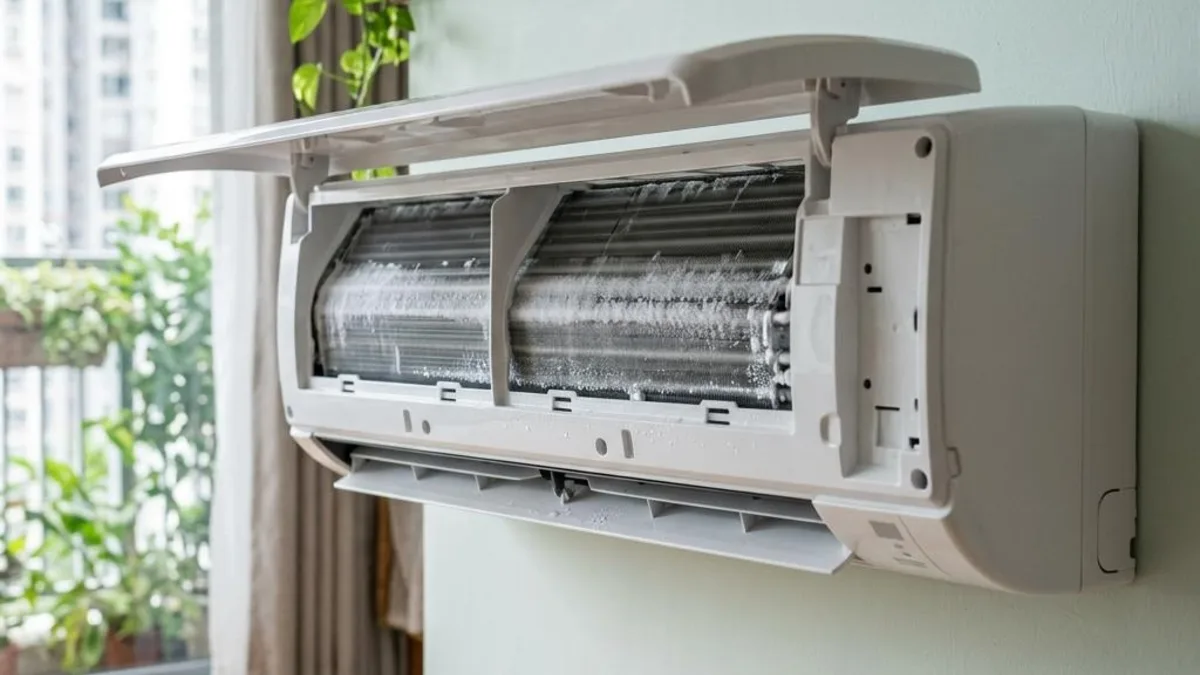
How to handle dripping after AC cleaning? Record the location, stop using it and arrange follow-up inspection
Contents
If water starts dripping after AC cleaning, first stop using it and record the leak location and start time from a safe place, then contact the service provider for follow-up. You cannot assume a blocked pipe, installation error or warranty coverage just because it happened after cleaning; existing faults, cleaning scope and site conditions must be checked separately.
First protect the site and do not test-run with water
If water is near a socket, wiring or electrical appliance, do not continue testing the unit, especially. Only handle nearby items if it is safe, and do not touch wet electrical parts. When recording, do not remove the panel, reach into the air outlet or climb out of the window to inspect the outdoor piping route. A tripped breaker or burning smell must also be checked, and the unit should not be restarted repeatedly.
Distinguish condensate, drainage and icing.
During normal cooling, moisture in the room condenses on the evaporator surface and is carried away through the collection and drainage components. If icing occurs, the causes such as airflow, control and system issues should also be checked; it is not only due to an incorrect drain pan slope. The shape of the droplets and the time they appear are for reference only and cannot be used alone to make a diagnosis.
What information should I provide to the service provider?
Provide the model, cleaning date, when the dripping started, the location, and whether it came with poor cooling, icing or unusual noise, and state whether the same issue existed before cleaning. If the original quotation only covered the indoor unit, do not assume all drain pipes, pumps or outdoor works were already included; let the staff arrange a follow-up inspection based on the information.
Residents should not perform pipe removal or flushing tests themselves
Do not remove the drain pipe, pour water, bleach, or drain cleaner into the opening, and do not force a tool in. Residents should not rinse the evaporator or adjust the unit angle; these actions may affect connections and inspection. The filter should only be maintained in the manner permitted by the manufacturer, and it cannot be used as the fix for every leak.
Inspection and repair: confirm the scope first
Our staff must first distinguish blockage, slope, connection, pump, insulation, icing or other equipment issues before assessing the work. Raising the set temperature does not fix a blocked pipe, and dismantling for cleaning does not mean all faults have been ruled out. Any parts, outdoor work or maintenance involved will be explained in advance under the confirmed terms.
How should follow-up be handled after completion?
The service staff restore the unit according to site conditions and check drainage and operation, while keeping records of the handled scope and any abnormalities. A brief period without water droplets does not mean all causes have been removed; if dripping resumes, the same set of before-and-after records will be used for follow-up. Do not repeatedly dismantle and reinstall it yourself or use prolonged operation as a test.
Related reading and services
Need professional help?
Need to know about AC repair service? First check the service scope and arrangements, then provide the model and site details for enquiry