

Want a quieter AC? How should noise specifications be checked?
Contents
Noise figures in the model specifications do not mean two numbers can be compared directly. Sound pressure, sound power, indoor and outdoor components, and operating modes are all different. It is more practical to first check what the data actually means than to simply chase the lowest dB figure.
Sound pressure and sound power are not the same figure
Sound pressure is related to the listening position, distance and environment, while sound power describes the sound characteristics emitted by the source. Both may be expressed in decibels, but you cannot compare one model’s sound power directly with another model’s sound pressure.
Room reflections, location and background noise affect the actual experience. Manufacturer figures should be read together with the specified test conditions; they do not mean the same result will be measured beside the bed or by a neighbour's window, and they are not a guarantee of complete silence.
Check indoor/outdoor settings, fan speed and operating mode
Information may differ between indoor and outdoor settings, as well as high, medium, low or silent fan speeds. The lowest fan speed figure does not represent the sound level when stronger airflow is needed on very hot days, and it also does not guarantee the same airflow after switching to silent mode.
It is more suitable to compare only after confirming similar cooling capacity, modes and indicators. Ads saying "from" usually depend on conditions; do not choose only the lowest number and ignore the room load and the manufacturer’s operating range.
Installation location and vibration can also affect use.
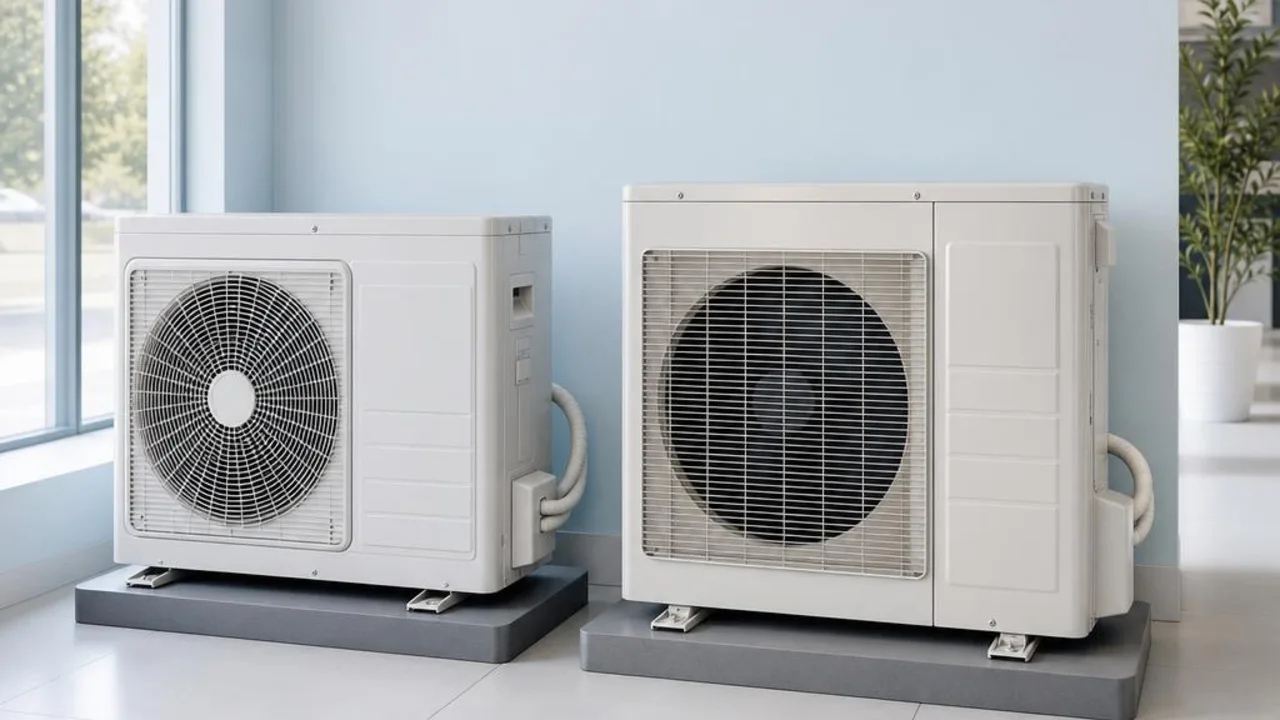
The support, wall, connections, and surrounding space can all affect noise and vibration. The manufacturer also requires suitable support and avoiding disturbance to the surroundings, so the site cannot be guaranteed to be quiet based on specification numbers alone.
The outdoor unit must allow for ventilation, maintenance access, and surrounding space. Do not add a sealed cover for soundproofing or block the air outlet. If improvements to support or unit position are needed, arrange a proper assessment; do not loosen brackets or pull on pipes yourself.
A newly appeared abnormal sound is not a simple specification comparison
Comparing noise before buying an AC is different from friction, knocking or suddenly louder sounds during use. The latter may require a fault or installation inspection, and the model’s original low-noise specification cannot be used to dismiss an abnormal sound.
If there is a burning smell, smoke, a tripped breaker, or severe abnormal noise, stop using it first. When enquiring, provide the model, when the noise appears, and any short video you can safely obtain; do not keep starting a dangerous unit just to compare recordings.
Related reading and services
- What to do when an already used AC starts making unusual noise
- A comparison of sound and installation for the two models
- Enquire about Oninstallation location and project
Common questions
Does a lower dB rating definitely mean quieter operation?
First confirm whether the noise index, unit parts, fan speed and test conditions are the same. Sound pressure and sound power cannot be compared directly, and the on-site location also affects perception.
Can a cover be used to reduce outdoor unit noise?
Do not block the air inlet or outlet yourself to reduce noise, as this may affect heat dissipation and safety. Placement, support and noise reduction arrangements must be assessed according to the manufacturer's requirements and site conditions.
Reference sources and applicable scope
This article provides a preliminary guide only and does not replace an on-site diagnosis. Original manufacturer functions and operation apply only to the corresponding model; please refer to your own unit's manual. For fixed electrical installations, inspection should be arranged by a registered electrical contractor.
Need professional help?
Need to know about AC installation service? First check the service scope and arrangements, then provide the model and site details for enquiry