
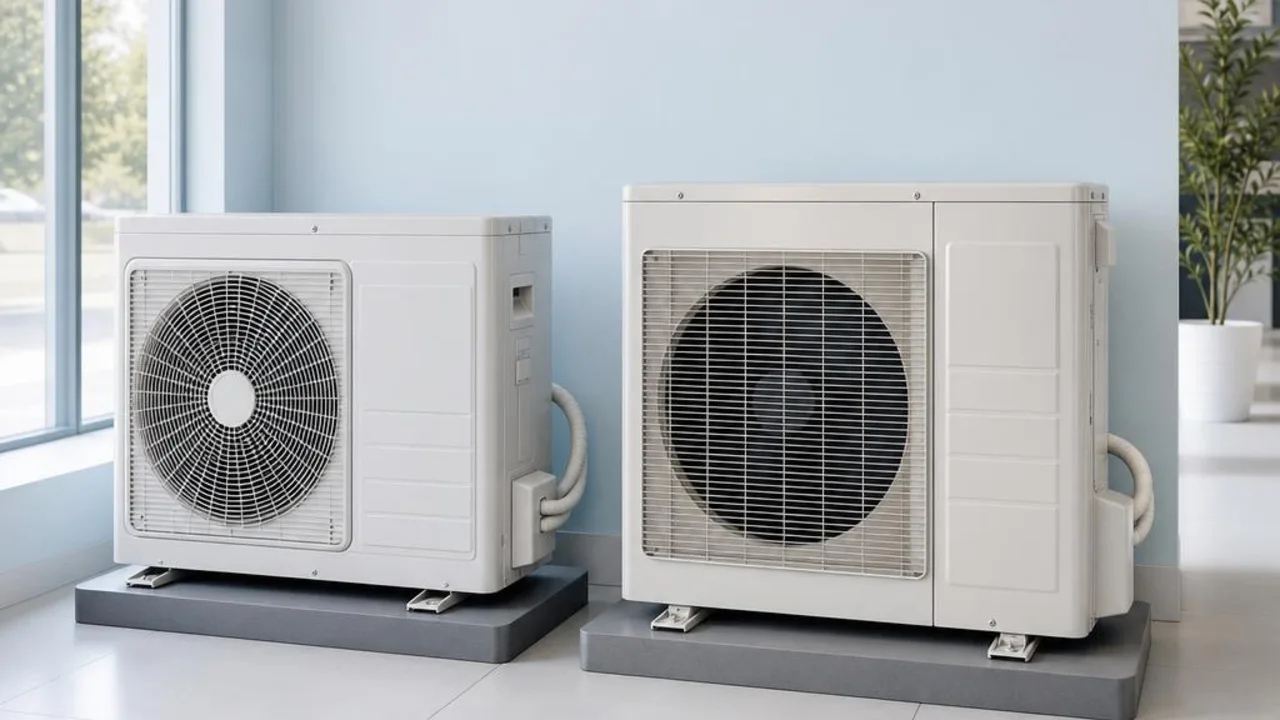
Is fan mode on an inverter AC really cheaper than cooling mode?
Contents
Autumn in Hong Kong often brings a strangely stuffy kind of heat. Although there is a cool breeze during the day, once you get home or into the office, a stale and oppressive feeling still lingers in enclosed spaces. Many Hong Kong residents, in order to save on electricity and avoid running the air conditioner for full cooling, habitually pick up the remote and switch the inverter air conditioner to "fan mode", thinking this can give the breeze of a fan while achieving the ultimate in electricity savings. Is keeping an inverter air conditioner in fan mode all day really the most economical choice in mild weather, or are there hidden electricity-wasting traps and air quality risks you have not noticed? Today, our professional AC cleaning team will reveal the truth!
Should you run the air conditioner or fan in mild weather? Debunking the stuffy indoor myth in Hong Kong autumn
Affected by Hong Kong’s climate, humidity remains relatively high in autumn. Fan mode works essentially like an ordinary fan, using only the internal fan to circulate air, and it does not dehumidify or cool. If indoor humidity is extremely high, simply blowing air will not solve the stuffy feeling. Fan mode is only suitable as supplementary ventilation and cannot replace cooling mode for dealing with humid air.
The real electricity use and principle of switching an inverter AC to fan mode
Many consumers have a misconception about inverter air conditioners, thinking that as long as cooling is off or the compressor is not running, electricity use should be close to zero. In fact, in fan mode, the compressor is indeed stopped or in a very low-load standby state, and the main power-consuming part at that time is only the indoor unit’s fan motor. Compared with the electricity used when the compressor is running at high speed during cooling, fan mode is indeed very energy-saving.
However, if the indoor temperature is already comfortable and you are relying on the air conditioner fan mode for a long time, it may be better to use a power-saving household pedestal fan or ceiling fan directly, because the power of some indoor fan motors in air conditioners may be slightly higher than that of a typical small fan. From a purely electricity-cost perspective, fan mode is indeed more energy-saving than cooling, but it may not be the most cost-effective choice.
The hidden risk of using fan mode: why does it keep blowing a musty smell?
Many homeowners take advantage of cool weather to keep the fan mode running for long periods, while overlooking a key hygiene issue. To help everyone clearly understand how the AC performs under different modes, we have organised the actual effects of fan mode and cooling mode into the comparison table below:
Operating modes 🔍
Operating principle and compressor status ⚠️
Potential odour and mould risks ✨
Cooling mode
As the compressor operates, condensate water keeps forming and washes away some dust
Moisture removes dirt, but prolonged dampness can encourage mould growth
Fan mode
The compressor stops, with only the indoor fan circulating air
Unable to produce condensation, and instead blows the mould smell long accumulated inside the blower drum into the room.
Automatic mode
Automatically adjust cooling and fan mode according to room temperature
Frequent switching without precise handling of seasonal humidity
The comparison above shows that if you use fan mode without flushing the condensate water, and dust and mould have already built up inside the unit, the airflow in fan mode can become a source of spread, blowing odours from deep inside the casing straight through the whole home, which is hardly worth it.
Seasonal energy-saving and maintenance guide: safe DIY limits and when to clean
During the slightly cool change of season, to balance energy saving and indoor air quality, you must understand proper maintenance and usage limits.
- 💡 Step 1: Clean the filter regularly and keep ventilation clear
Operation: every two weeks, remove the dust filter and rinse it clean with water to keep the air path clear.
Verification method: ensure sufficient intake airflow to avoid extra motor load caused by dust buildup on the filter.
- 💡 Step 2: Use Fan mode to dry the inside of the unit
Operation: after each cooling cycle, switch to fan mode and run for 15 minutes.
Verification method: use airflow to dry residual moisture on the evaporator, cutting off conditions for mould growth.
- 💡 Step 3: Take advantage of the prime autumn and winter cleaning period
Operation: before winter begins, arrange for a professional AC cleaning team to visit for a deep high-pressure clean.
Verification method: remove stubborn mould on the fan drum and aluminium fins effectively, so the unit will be more energy-efficient next year.
Here, it should be clearly defined that the "safe DIY range" is limited to cleaning removable filters and the exterior surface of the unit; deep sterilisation involving the blower wheel, drain tray, and internal components must be handled by professionals.
Seek help from a professional team
Frequently Asked Questions (FAQ)
Q1: Inverter ACs on Fan mode in cool weather really use no electricity at all?
A: Not completely. Fan mode does not start the compressor, but the indoor unit’s fan motor is still running and consumes a small amount of electricity, just much less than when cooling.
Q2: Why does Fan mode sometimes make a strong musty smell even more noticeable?
A: Because dust, moisture, and mould have built up inside the air conditioner, especially in the blower and the gaps between the aluminium fins. The airflow from fan mode will carry the mouldy smell hidden deep inside the unit directly into the room, which is why regular deep cleaning is recommended.
Q3: Why is autumn the best time to book AC cleaning after the weather turns cooler?
A: Autumn is dry, AC usage drops, and it is the ideal period for full maintenance and high-pressure cleaning. Cleaning at this time not only removes summer residue, but also helps ensure smoother and more energy-efficient operation when the unit is turned on again next year.
Related reading and services
Want to arrange AC cleaning or maintenance?
OPOExpert Air Conditioning provides residential and commercial AC cleaning and maintenance with clear pricing. Enquiry first or book online directly