
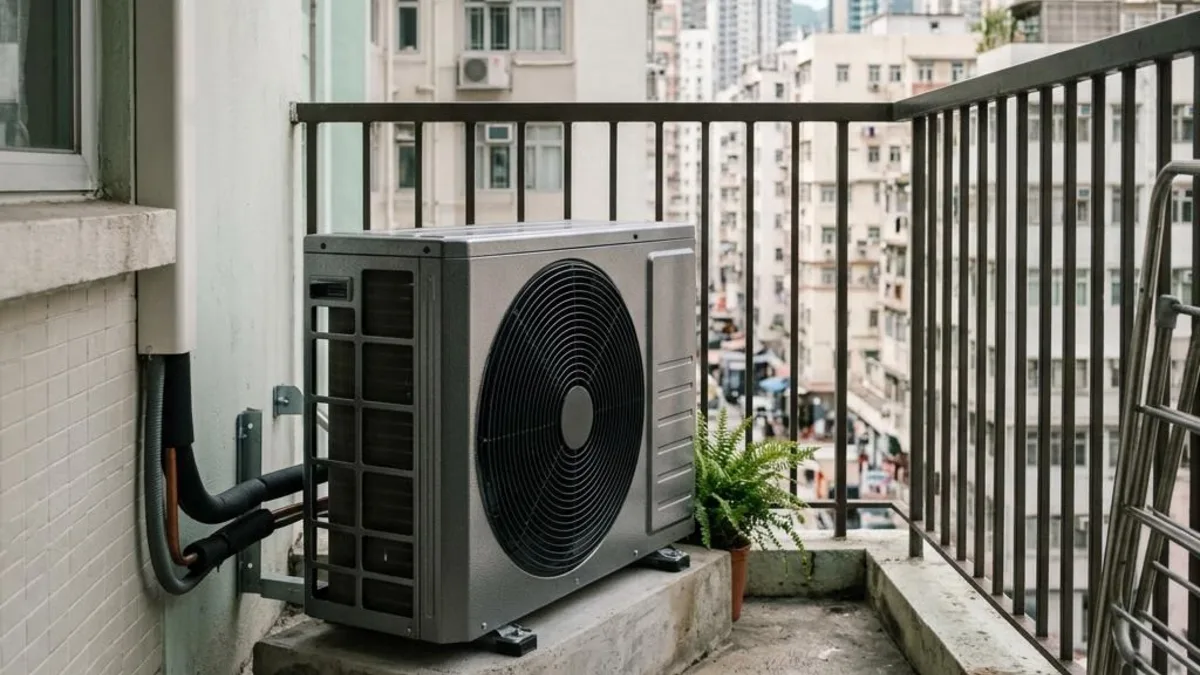
Loud outdoor unit noise: dust, vibration, and component faults should be checked separately
Contents
Louder outdoor unit noise may be related to dust, airflow, fixing, vibration, or component faults. You cannot assume that cleaning will make it quiet just because you hear a rumbling sound, and you cannot conclude the compressor is damaged without inspection.
How dirt buildup may affect operation
Dust on the blades, blocked heat sink fins, or nearby objects obstructing airflow can affect operation; whether this causes abnormal noise needs to be confirmed according to the unit's condition.
Without case statistics, you cannot claim that more than half of outdoor unit noise is caused by dirt, nor can cleaning be treated as the primary or only solution to all noise issues.
Fixing, vibration control and components also need to be checked
The casing, fixings, supports, anti-vibration parts, pipe contact points and fan components may all be areas to check. Different sounds cannot be diagnosed directly from text or a short video alone.
Do not tighten the exterior wall bracket yourself, reach in with a tool to test the fan, press on the unit, or touch moving parts while it is running.
When should use be stopped first?
If there is a sudden obvious unusual noise, strong vibration, a burning smell, smoke, repeated tripping, or the unit appears loose, stop using it and arrange an inspection; do not repeatedly turn it on to record test videos.
If it can be recorded safely from indoors, you may keep a record of the pattern, time, whether it was accompanied by poor cooling, and any fault code; do not lean out of the window or approach the outdoor fan.
Safety and quotation boundaries for outdoor unit cleaning
First confirm the unit location, support and accessibility before deciding on waterproofing, cleaning and the required safe work arrangement. Water pressure and cleaning agent use must suit the equipment condition; it is not necessary to use maximum industrial pressure.
Cleaning the outdoor condenser is different from parts replacement, leak testing, or installation corrections; it cannot be promised that cleaning will always include refrigerant pressure measurement or on-site replacement of anti-vibration pads.
First inspect, then decide whether to clean, repair or replace
First distinguish dirt that can be cleaned from parts, fixing or control issues that require repair. If the abnormality remains after cleaning, follow up according to the inspection results, and do not assume the risk is gone just because the noise has temporarily become quieter.
Enquire about TimesProvide the model, fault condition, a photo of the outdoor location that can be safely taken from indoors, and any site access restrictions from the management office; actual handling and charges will be confirmed according to the current scope and quotation.
Related reading and services
- AC fault inspection and repair arrangements
- Current pricing and scope for AC add-on services
- Back to AC encyclopedia
Reference sources and applicable scope
This article provides a preliminary guide only and does not replace an on-site diagnosis. Original manufacturer functions and operation apply only to the corresponding model; please refer to your own unit's manual. For fixed electrical installations, inspection should be arranged by a registered electrical contractor.

Need professional help?
Need to know about AC repair service? First check the service scope and arrangements, then provide the model and site details for enquiry