
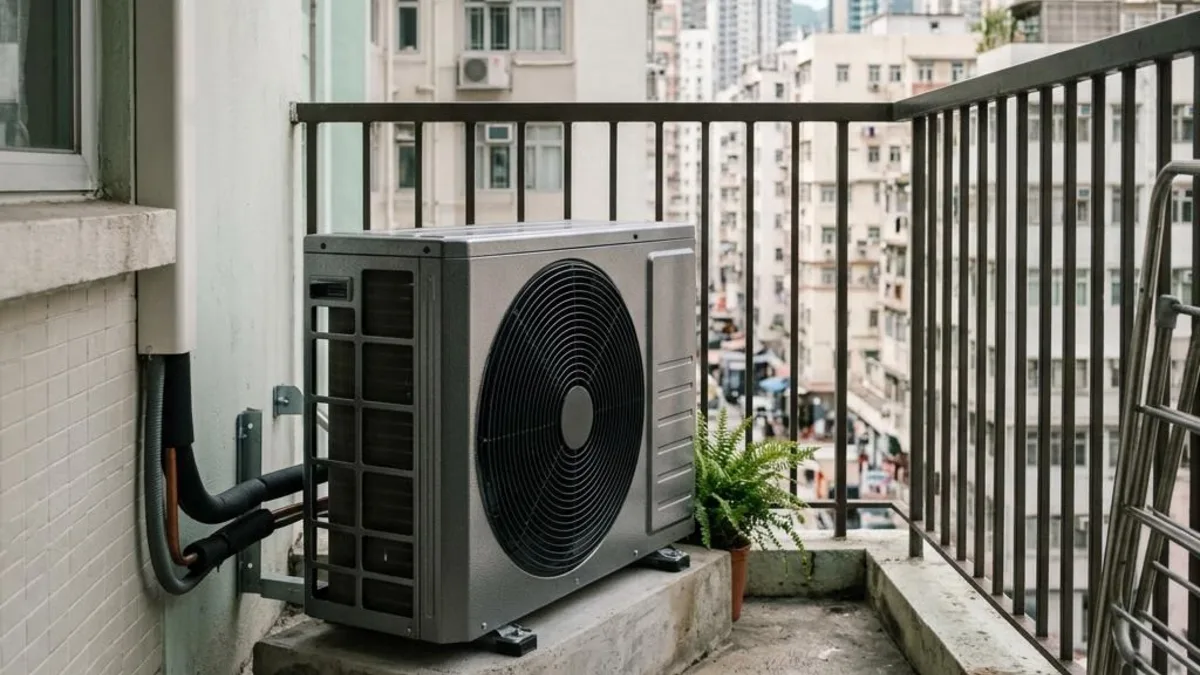
What happens if the outdoor air conditioner unit is too dirty? The main cause of weak cooling and a sharp rise in electricity bills
Contents
When your air conditioner is no longer cooling properly, or you receive a shocking electricity bill, most people only know to clean the indoor dust filter. Yet one of the most critical but often overlooked hidden culprits is hanging outside the window: the outdoor air conditioner unit (condenser).
Outdoor units are exposed to the weather year after year, and are affected by exhaust fumes, cooking smoke, and bird feathers. If an outdoor unit becomes too dirty, the consequences may be far more serious than you expect. This article explains the severe impact of a dirty outdoor unit on air-conditioning performance.
Operating principle: the outdoor unit is the heat exhaust outlet
To understand why the outdoor unit is so important, first you need to understand how an air conditioner works: an AC is essentially a heat mover. The indoor unit absorbs heat, while the outdoor unit releases it. If the outdoor unit's heat sink fins are clogged with heavy dust, heat cannot escape. It is like running in a down jacket in the summer; heat exhaustion is only a matter of time.
Three major consequences of a very dirty outdoor unit
1. AC not cooling properly, or even tripping off
This is the most direct sensation. When the heat sink is blocked, the refrigerant cannot cool effectively, so the air blown out is not cold.
- Protection shutdown: Some models trigger protection due to temperature, pressure or other abnormalities, depending on the model and the fault. Do not conclude from a shutdown alone that the outdoor unit is dirty, and do not repeatedly power it on for testing yourself; stop using it and arrange an inspection.
2. Electricity bills soar and your wallet takes a hit
For inverter air conditioners, a dirty outdoor unit is the main cause of wasted electricity.
- Poor heat dissipation may increase operating load, but actual power consumption is still affected by settings, the environment, the model and other operating conditions. It cannot be stated in general that the compressor must stay at full load, nor can a fixed energy-saving percentage be calculated from this.
- Data reference: poor heat dissipation may increase compressor current and affect operating efficiency. Keeping the outdoor unit clean helps maintain normal air-conditioner operation.
3. Shortened lifespan, compressor overload and failure
The compressor is a core component of the air conditioner. Long-term overworked operation under high temperature and high pressure will accelerate wear and increase the risk of failure. Regular maintenance of the outdoor unit helps keep it operating normally.
DIY cleaning vs professional cleaning: do not try at random
Many owners want to rinse the outdoor unit with a hose themselves, but the risk is extremely high:
- Dripping nuisance: cleaning wastewater should be properly collected to avoid affecting lower-floor residents or pedestrians. If AC dripping causes nuisance, it may involve notification to the Food and Environmental Hygiene Department and related legal procedures. It is not an automatic fine just because water is dripping; the applicable conditions must be checked against the current official guidelines.
- Electric shock and damage: there are high-voltage circuit boards inside, so spraying water carelessly can easily cause a short circuit; in addition, the aluminium fins are extremely thin, and strong water pressure can bend or collapse them, completely blocking the heat dissipation path.
- Professional handling: Technicians must assess whether cleaning is suitable based on the model, the manufacturer’s approved methods, circuit protection, safe access, and wastewater collection conditions. Chemicals and water pressure should not be applied universally; having professional tools does not guarantee the unit will not be damaged or that there is no working-at-height risk.
Indoor cleaning and outdoor-unit treatment should be kept within their proper scopes; not every cleaning job means the outdoor unit must also be serviced. Whether the outdoor location can be reached safely, and whether exterior wall or extra work is involved, must be assessed separately. If the unit still does not cool properly or makes unusual noise after cleaning, other faults also need to be checked; do not assume dust alone is the cause.
Related reading and services
- Related service scope and current charges
- Back to AC encyclopedia
- FEHD: Conditions for the inspection and maintenance of air conditioners and dripping water nuisance

Need professional help?
Need to know about Residential air conditioning service? First check the service scope and arrangements, then provide the model and site details for enquiry