
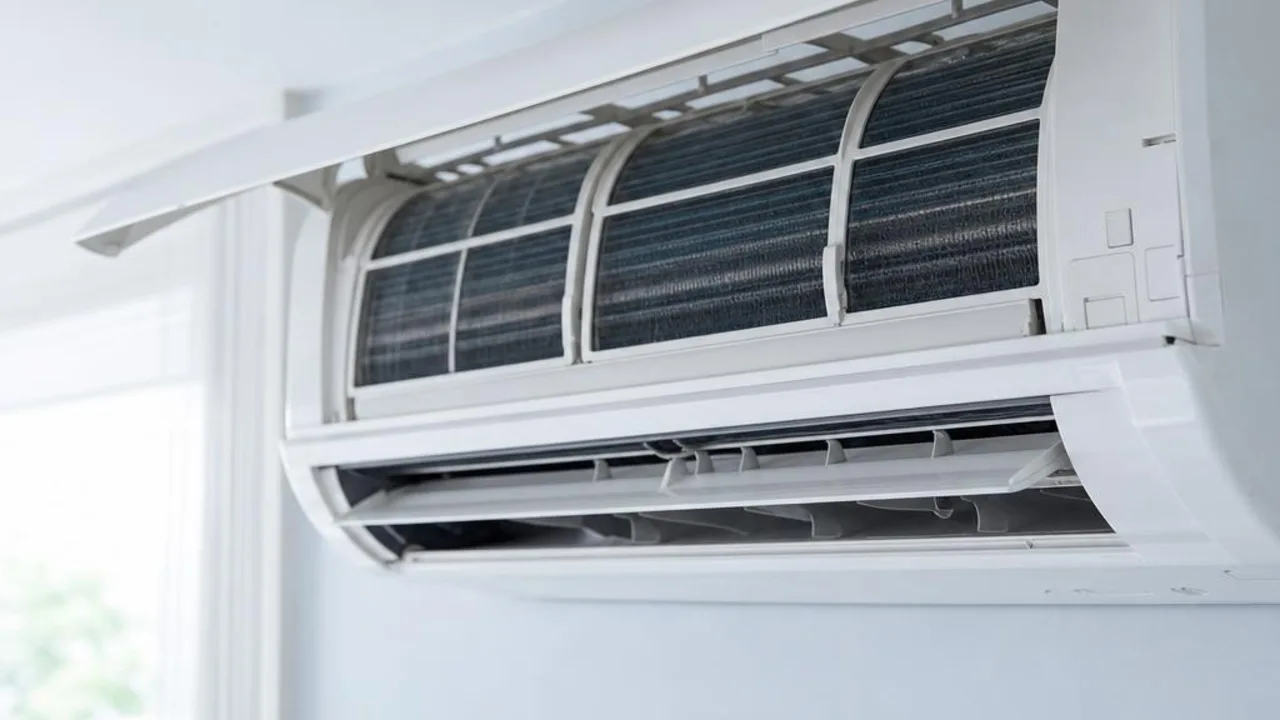
Frequent sneezing when the AC is on caused by dust mites? A health guide from filter cleaning to internal AC cleaning
Contents
Whenever people switch on the air conditioner in summer, do they start to get a blocked nose, runny nose, and constant sneezing? Many think this is just ordinary 'air-con sickness' or sensitivity to cold air, but in fact the real culprits are often dust mites, mould, and large amounts of allergens hidden inside the air conditioner! As cold air blows out, these microorganisms and particles that cannot be seen with the naked eye keep circulating in the enclosed space and directly irritate the respiratory tract. This article breaks down the truth behind air-con allergies, explains the deep-cleaning steps for the filter versus the inside of the unit, and shows when to seek help from a professional team so you can get back fresh and healthy air!
Why do you sneeze as soon as the air conditioner is turned on? Two hidden sources of allergens
During operation, an air conditioner continuously draws in indoor air, cools and dehumidifies it through the internal evaporator, and then blows it back out. This process creates an ideal breeding ground for microorganisms:
The “breeding ground” of dust mites and airborne droppings
Dust mites like to grow in environments with relative humidity of 60%–80% and temperatures of 20°C–25°C. Although dust mites mainly live in mattresses and fabric sofas, the dust filters and dead corners inside an air conditioner can accumulate large amounts of human skin flakes and dust, becoming a food source for dust mites. When the AC fan is switched on, dust mite remains, droppings and tiny fragments accumulated on the filter can be blown out by the strong airflow and suspended in the air, triggering allergic rhinitis.
The “mould party” on the evaporator (coil) and blower wheel
Moisture and accumulated dust during cooling are worth noting during maintenance, but a mould smell alone cannot be used to determine the mould species, spore count or the cause of an individual’s illness. Record the odour and visible stains, and assess cleaning and moisture sources based on the condition of the unit; breathing discomfort should be followed up by healthcare professionals, not treated with AC cleaning instead of medical care.
DIY maintenance: 3 steps for cleaning the filter and casing
Regular cleaning of the dust filter is the first line of defence in maintaining basic air quality. During peak summer use, it is recommended to clean it once every 2 to 3 weeks:
Step 1 | Safe power-off and removal
- Turn off the AC power (unplug it or switch off the main breaker). Open the front cover and gently remove the plastic dust filter, avoiding excessive force that could send dust flying everywhere.
Step 2 | Correct filter washing (do not use hot water)
- First use a vacuum cleaner to remove loose surface dust, then use warm water (below 40°C) or neutral detergent with a soft brush to rinse from the back of the dust filter toward the front (push the dust away rather than deeper in). Do not use hot water or strong acidic or alkaline cleaners, as they may deform the filter plastic.
Step 3 | Thorough air-drying in a shaded place
- Place the washed dust filter in a cool, ventilated place to air-dry naturally. Do not expose it to direct sunlight, as ultraviolet light and high heat may make the plastic filter brittle and crack.
A clean dust filter is not enough? The "inside of the unit" is where the biggest pollution problem is
Many homeowners wonder: "I clean the dust filter every week, so why do I still sneeze and smell mould when I turn on the air conditioner?"
The key point is this: the dust filter can only block large dust particles above 20%! Tiny skin flakes, oil, moisture, and mould spores can pass through the filter and stick directly to the deep metal evaporator coil, water tray, and blower wheel, forming a sticky layer of "biofilm".
For home DIY use, store-bought spray-type AC cleaners may only temporarily clean a small amount of dust on the evaporator surface. They cannot thoroughly clean built-up grime in the blower wheel, drain pipe and drip tray, and may even cause secondary contamination or corrode the metal fins if chemical residue remains.
Dust filter DIY vs. professional deep AC cleaning comparison table
Assessment dimensions
DIY cleaning of filters and casing
Professional cleaning Air Conditioning Service
Cleaning Scope
Limited to the surface plastic dust filter and outer casing
Evaporator (coil), blower wheel at the air outlet, drain pan, drain pipe
Allergen removal rate
About 20% – 30% (surface dust)
95% The above (thoroughly eliminating deep-seated dust mites, mould and biofilm)
Odour removal ability
Very low (unable to remove internal mouldy odour)
Very high (high-pressure water jet + dedicated high-temperature disinfection to remove the source of the mouldy smell)
Equipment protection
None
Improve heat dissipation efficiency, save electricity, and extend AC lifespan
Recommended frequency
Once every 2–3 weeks
1–2 times a year (before and after summer)
Seek help from a professional team
If, after cleaning the dust filter, you still keep sneezing and getting a runny nose when the AC is on, or if black spots (mould clumps) are blown out from the air outlet, or the AC gives off a strong mouldy smell and cools much less effectively, it means the inside of the unit is seriously contaminated. At this point, getting a professional team to carry out a full-unit deep high-pressure clean is the most effective way to eliminate the root cause of allergies. Enjoy AC that is as strong, odour-free and allergen-free as a brand-new unit!
Related reading and services


Need professional help?
Need to know about Residential air conditioning service? First check the service scope and arrangements, then provide the model and site details for enquiry