
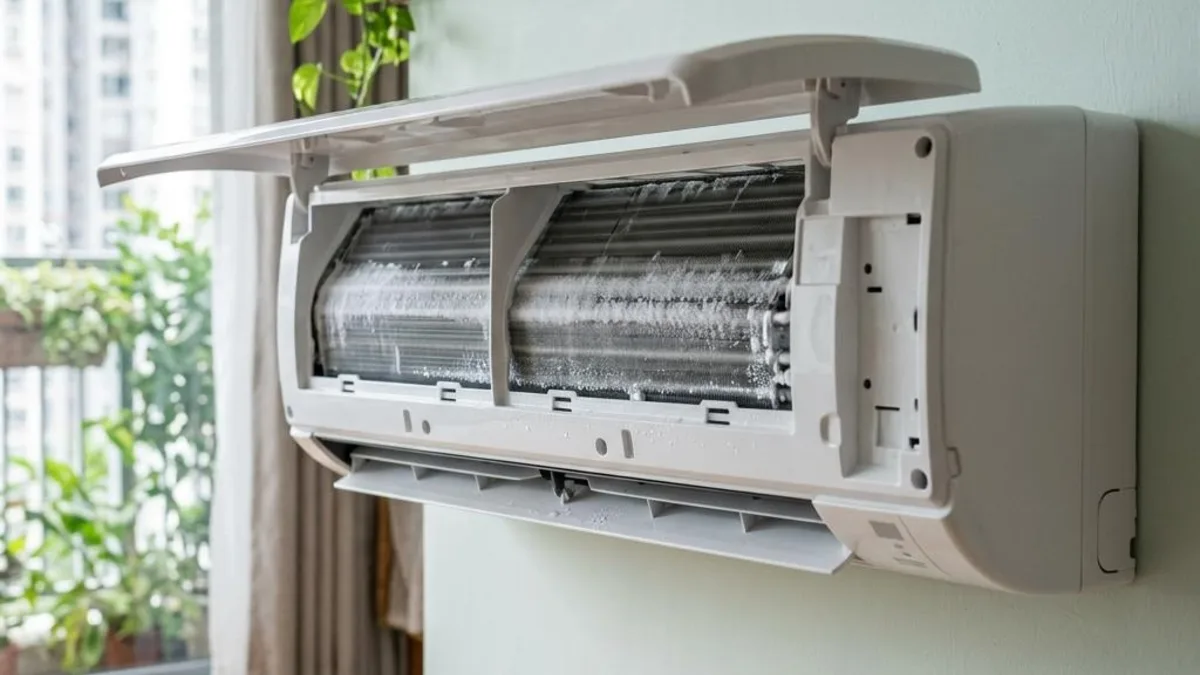
Water dripping after AC cleaning
Contents
If water starts dripping shortly after AC cleaning, common causes include: a high-pressure washer flushing old scale and biofilm from deep inside the evaporator, which then gets caught at a bend in the drain pipe; the drain pan not being fully secured when refitted; a loose drain pipe joint; or residual water on the blower wheel causing water to blow out from the air outlet. If dripping occurs, first switch off the unit and cut the power, observe where the water is coming from (water blown from the outlet, overflow from the base pan, or water seeping from the wall), and seek a professional cleaning team with after-sales support to re-inspect and clear the drain.
Why does the air conditioner drip water after cleaning? Breaking down 4 common causes
Many homeowners arrange for a professional team to clean the AC and expect to enjoy cool air with peace of mind, only to find the indoor unit dripping water within days or even hours. This often raises concerns about the cleaning quality. In fact, the causes of dripping after AC cleaning are quite varied and can generally be grouped into the following four categories:
After washing, stubborn pectin or dirt clumps block the drain pipe again (secondary blockage of the pipe)
This is the most common cause of dripping after AC cleaning.
- Mechanism: When the AC has not been cleaned for years or heavy buildup is present, a large amount of biofilm forms at the bottom of the evaporator and drain pan from a mixture of bacteria, dust, and moisture.
- What happens during a blockage: During high-pressure water cleaning, although most sludge is washed away, a small amount of broken fruit pulp may still be carried by the water into the drain pipe. If the drain pipe already has age-related hardening or a slight bend inside, these remaining bits can easily get stuck at the bends in the pipe. Within a few days, they can block the water flow and cause the drain pan to overflow and drip.
Drip tray installation misalignment or loose clips
During deep cleaning or when using a water-collection bag, the technician needs to remove the casing or adjust the drain pan.
- Mechanism: The drain pan is a key component that collects condensate from the evaporator and directs it to the drain pipe. If it is not fully seated into the fixing slot during reassembly, if the drain pan is tilted, or if the rubber ring at the water bottle/drain pipe connection has come loose, the condensate cannot flow smoothly into the pipe.
- Dripping symptom: Water seeps directly along the bottom of the unit, the wall, or the edge of the air outlet frame, and noticeable dripping usually appears within 15 to 30 minutes after switching on.
Fan wheel residual water and damp insulation padding (air blowing water / dripping water)
- Mechanism: When a high-pressure water jet is used to clean the cross-flow fan and internal air passages, if residual water inside the fan is not fully blown dry after the work, or if the internal insulation cotton has absorbed water during cleaning, the high-speed rotating fan may fling water droplets out when the unit is turned on.
- Dripping symptom: This kind of situation usually appears as "tiny droplets blown out by the airflow" or "large droplets condensing on the air outlet blades and dripping down". It usually eases naturally after the unit has been running for a while and the internal moisture has evaporated. However, if the insulation cotton is damaged, professional handling is needed.
Evaporator icing and thawing caused by insufficient refrigerant
This is not directly caused by cleaning, but is a condition that becomes apparent after cleaning.
- Mechanism: When the AC is originally very dirty, dust blocks airflow and masks the symptoms of low refrigerant. After a deep clean restores normal airflow, the evaporator may become locally overcooled and iced up due to insufficient refrigerant. When the AC is switched off or the inverter speed drops, the ice on the evaporator melts quickly into a large amount of water, exceeding the drain pan's immediate capacity and overflowing.
Initial self-check: is it a blocked drain pipe or a post-work issue?
If water drips after AC cleaning, you can use the following symptom comparison table for a preliminary diagnosis, which also helps when describing the situation to the cleaning team:
Comparison table of dripping causes and symptoms
Diagnostic items
Secondary blockage in the drain pipe 🚫
Drain tray / assembly misalignment 🔧
Air outlet water spray / insulation dampness 💦
Insufficient refrigerant causing icing and thawing water ❄️
Dripping location
The drip tray overflows, causing heavy dripping along both sides of the base or across the wall
Water seepage along the unit seam or at specific points on the wall
Small water droplets blowing out from the air outlet, or moisture on the louvres
Sudden heavy dripping inside the air outlet (during defrosting)
Onset time
1–3 days after cleaning (dirt gradually builds up and blocks it)
Immediately after cleaning or within 15–30 minutes after switching on
Most noticeable in the first few hours after turning on, then may gradually ease
A few minutes after running for a while or after shutdown
Water flow condition
Continuous dripping, with a larger amount of water
Stable minor leakage
Water droplets blown out by the wind
A large amount bursts out in a short time
External wall / bathroom drain pipe
No water at all, or only a very small amount of water coming out
Drainage is normal or slightly reduced
Drainage is normal
Before dripping, the water output was small, then suddenly increased when the ice melted
Emergency Steps When an AC Drips 4 Steps
Before a professional technician arrives, please carry out the following emergency steps to prevent water from soaking furniture or causing an electrical short circuit:
- Cut off the power immediately: turn off the AC with the remote control at once, then switch off the main wall switch or unplug it to prevent moisture from seeping into the main board and causing tripping or a short circuit.
- Place water-collecting items and protect appliances: Put a thick towel under the dripping area and place a container to catch the water. Move away any TV, computer, wooden furniture, or extension strip below.
- Photo and video record: photograph the exact leaking point (bottom of the unit, wall, or air outlet) and the dripping frequency. This is very useful for the technician to quickly identify the fault.
- Check the outlet of the external drain pipe: if conditions allow, observe whether water is flowing out at the exterior wall or bathroom drainage point. If there is no water at all and the unit is overflowing, the drain pipe is basically blocked.
Seek help from a professional team
After-sales support and troubleshooting after air conditioner cleaning are just as important as the cleaning method itself. As a professional AC cleaning team, we understand the concerns and inconvenience customers face when dripping water occurs after cleaning. We insist on handling every maintenance request in a practical and responsible way. If the air conditioner in your home or office starts dripping, develops odors, or operates abnormally after cleaning, please contact our AC cleaning team. We will arrange for a professional to visit and carry out a thorough inspection and treatment!
Related reading and services
Need professional help?
Need to know about AC repair service? First check the service scope and arrangements, then provide the model and site details for enquiry