
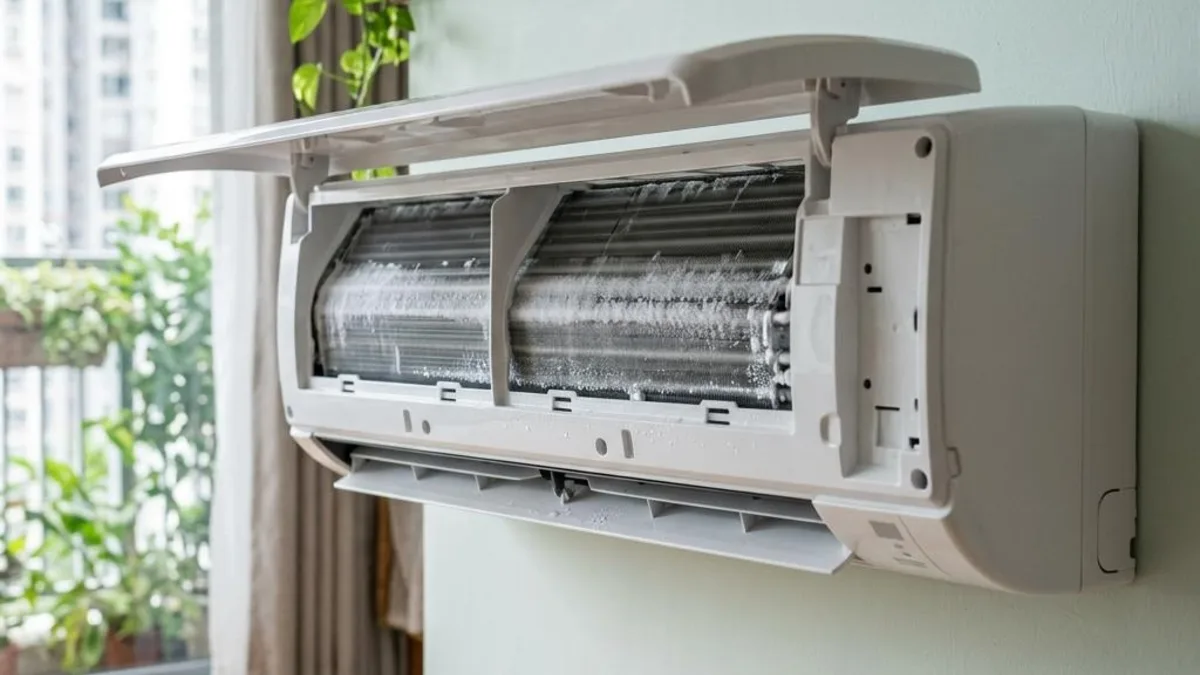
Split AC dripping: how to quickly locate the problem and solve it
Contents
In the hot summer, split-type air conditioners are essential equipment in many homes and offices. However, water dripping from the air conditioner may occur during use, which can be troublesome for users. Therefore, it is important to quickly identify and solve the dripping problem to ensure the air conditioner operates normally.
Split AC dripping | Common causes of AC dripping and detailed explanations
Blocked drain pipe: after long-term use, dust and dirt may build up inside the drain pipe, causing poor drainage and dripping. When condensate cannot drain properly, the water level rises and eventually leaks from inside the unit.
Filter contamination: too much dust on the filter may block normal drainage of the air conditioner and cause dripping. When excessive dust builds up on the filter surface, airflow inside the unit is restricted, preventing condensate from draining quickly and causing dripping.
Improper installation: If the drain pipe is not fixed properly or the slope is unsuitable during installation, drainage performance may be affected, resulting in dripping. If the pipe does not have an appropriate slope, water cannot flow out smoothly and dripping will eventually occur.
Excess condensate: in a high-humidity environment, the AC produces more condensate during operation, which may lead to poor drainage and dripping. When the AC is running, indoor moisture condenses into water droplets on the condenser; the higher the humidity, the more condensate is produced.
Split AC dripping | Methods and steps to quickly locate the problem
To solve a leaking air conditioner, first determine the root cause. Here are some suggestions to help you quickly identify the problem:
Check the drain pipe: observe the drainage condition. If drainage is slow or impossible, the pipe may be blocked. Also inspect the drain pipe joints regularly to see whether any foreign object is blocking the opening, or whether the pipe is bent or compressed.
Check the filter: open the AC panel and look for excessive dust on the filter surface. If the filter has turned dark or shows obvious dust buildup, the dripping water problem may be caused by a dirty filter.
Check the installation: make sure the air conditioner is installed in the correct position, the drain pipe has a proper slope, and the drain pipe is securely fixed to prevent dripping caused by it coming loose.
Assess indoor humidity: determine whether the indoor humidity is high. If the humidity is high, it may lead to excessive condensation and cause dripping.
Split AC dripping | Methods and measures to solve AC dripping
Based on the problem identified above, apply the corresponding solution:
Blocked drain pipe: clean the drain pipe with specialised tools such as a pipe cleaner to ensure smooth drainage; if the drain pipe is aged, replacement with a new drain pipe is recommended.
Filter contamination: clean or replace the filter regularly to keep the surface clean. When cleaning the filter, it can be rinsed with water or gently brushed with a soft brush to remove surface dust.
Improper installation: Please ask a professional to inspect the AC installation and make adjustments to ensure correct installation. If the drain pipe is not fixed properly, it should be refastened and the slope should be set correctly.
Excess condensate: adjust the AC operating mode and use the dehumidification function to reduce indoor humidity; if indoor humidity remains too high, consider buying a dehumidifier to improve the indoor environment.
Split AC dripping | Preventing AC dripping
To prevent recurring water leakage from the air conditioner, you can take the following preventive measures:
Regular maintenance: maintain the air conditioner regularly, including cleaning the filter, drain pipe and other components, to ensure normal operation.
Proper use: avoid using the air conditioner for long periods in very humid environments to reduce condensation. Also, choose an appropriate temperature when using the air conditioner, and avoid setting it too low, which may cause the filter to frost over.
Proper ventilation: Keeping the indoor area well ventilated helps reduce humidity and condensation generated while the air conditioner is running.
Buy a reliable air conditioner: Choosing a reliable, stable-performing AC can reduce dripping caused by equipment issues.
Split AC dripping | Seek professional help
If the dripping water problem still remains after trying the solutions above, it is recommended to seek professional help. A professional AC repair team can identify the problem more precisely and provide an effective solution.
In summary, for water dripping from a split-type AC, it is very important to identify the problem quickly and take appropriate solutions. Regular maintenance, proper use, keeping the area ventilated, and choosing a reliable AC unit can effectively prevent water dripping and ensure normal operation. Of course, when you encounter a problem you cannot solve, seeking professional help is also a wise choice.
Find professional help
When a split-type air conditioner has a dripping problem, seeking help from a professional team is a wise choice. They can quickly identify the source of the problem, carry out the necessary inspection and cleaning, ensure the air conditioner operates normally, avoid further damage, and let you enjoy a comfortable environment with peace of mind.
Related reading and services
Need professional help?
Need to know about AC repair service? First check the service scope and arrangements, then provide the model and site details for enquiry