
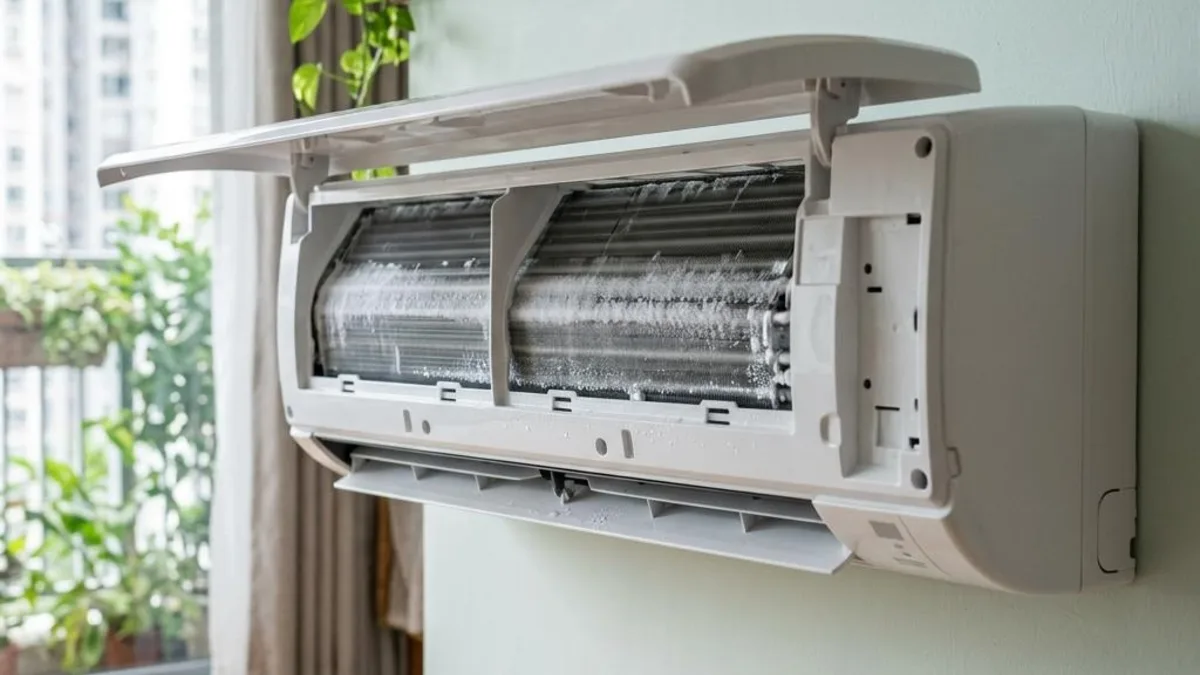
AC leakage | Why is the AC suddenly leaking? How to fix it
Contents
Air conditioners have become a necessity in daily life, helping you stay cool during the day and sleep well at night. But as use increases over time, the chance of faults also rises. Water leakage is one of the most common issues. To solve AC water leakage, it is best to first understand the causes and start with regular maintenance.
AC leakage | Causes of AC leakage
There are many possible causes of AC leaking. A common one is long-term lack of cleaning, which causes dirt and dust to build up in the drain pipe over time, leading to blockage that prevents proper drainage and eventually causes overflow and leakage.
Another more common cause of AC water leakage is leakage from the extended drain pipe of a newly installed air conditioner. In most cases, this is caused by problems during installation, including the back end of the drain pipe being higher than the front end, causing a small water pocket to form in the middle of the pipe and overflow when it fills up. If the position difference is too large, a professional should be informed promptly to repair it to ensure normal operation of the air conditioner.
In addition, if the indoor unit’s mounting bracket is not installed securely, after a long period of time the front end of the drain pipe may become too high, making drainage difficult and easily causing water accumulation and leaks. Also, if the drain pipe has been used for many years, it may age, loosen or bend, which can also lead to poor drainage, water accumulation or leaks.
Some window unit designs use condensate in the base tray to help outdoor heat dissipation, but whether water accumulation is allowed, whether drainage is needed and the water level requirements depend on the model manual; this cannot be generalised to all window units, and the indoor drainage arrangement of split units cannot be applied. Do not drill into the base tray or block the drain outlet yourself.
AC leakage | AC leaking and not cooling
If there is leakage and poor cooling at the same time, it may involve different issues such as airflow, ice formation, drainage or the refrigerant system. Do not conclude from sound alone that ice is hitting the fan. Stop using it and arrange an inspection first. If a leak is confirmed, the leak point must be handled and tested according to the manufacturer's requirements before evaluating recharging; do not simply top up refrigerant.
Damaged insulation may cause condensation on the outer surface, but this alone cannot be used to conclude that the refrigerant inside the pipe is icing up or that cooling is insufficient. Blocked supply or return air vents can also affect temperature sensing and cooling; the two issues must be checked separately. Residents should not dismantle pipes or carry out repairs at height themselves.
AC leakage | AC leaking when it rains
If leakage happens only when it rains, the source must be distinguished between the wall penetration, exterior wall, window sealing, and water ingress into the unit, and assessed by the appropriate person. The opening, slope, and waterproofing method must follow the site conditions and the manufacturer’s requirements; residents should not drill the wall or move the unit themselves.
Do not use cement, sealant, or debris to block the air conditioner drain opening, and do not add an outdoor cover at random to block heat dissipation. Find the rainwater path and arrange safe waterproofing or installation corrections; work on exterior walls and at height requires separate assessment.
AC leakage | AC leakage repair
Drainage blockage must be confirmed by service personnel, who will check the piping, connections, slope and pump condition before choosing the appropriate cleaning method. Residents should not remove the cover to blow through the pipe, pour chemicals or use a pressure washer to clear it, and there is no guarantee that annual cleaning will prevent dripping from recurring.
In addition, when installing an AC unit, the technician will measure the level and tilt the unit slightly toward the side connected to the drain pipe. If the tilt is in the wrong direction, causing condensate to flow toward the side without a drain connection, or if the unit is lower than the drain outlet, drainage problems will occur and water may flow back. The solution is to reinstall it and correct the position.
Please note that air conditioner water leakage repairs should target the cause of the leak. It is best to hire a professional technician to inspect and repair on site, as repairs may involve multiple parts and there may be several possible causes. Professional on-site troubleshooting is required one by one.
Find professional help
Sudden water leakage from an air conditioner may be caused by various reasons, such as blocked pipes or condensate drainage problems. Seeking help from a professional team can help you identify the issue accurately and resolve it quickly. They have the technical skills and equipment to maintain the air conditioner effectively, ensure normal operation, and prevent further damage.
Related reading and services
Need professional help?
Need to know about AC repair service? First check the service scope and arrangements, then provide the model and site details for enquiry