
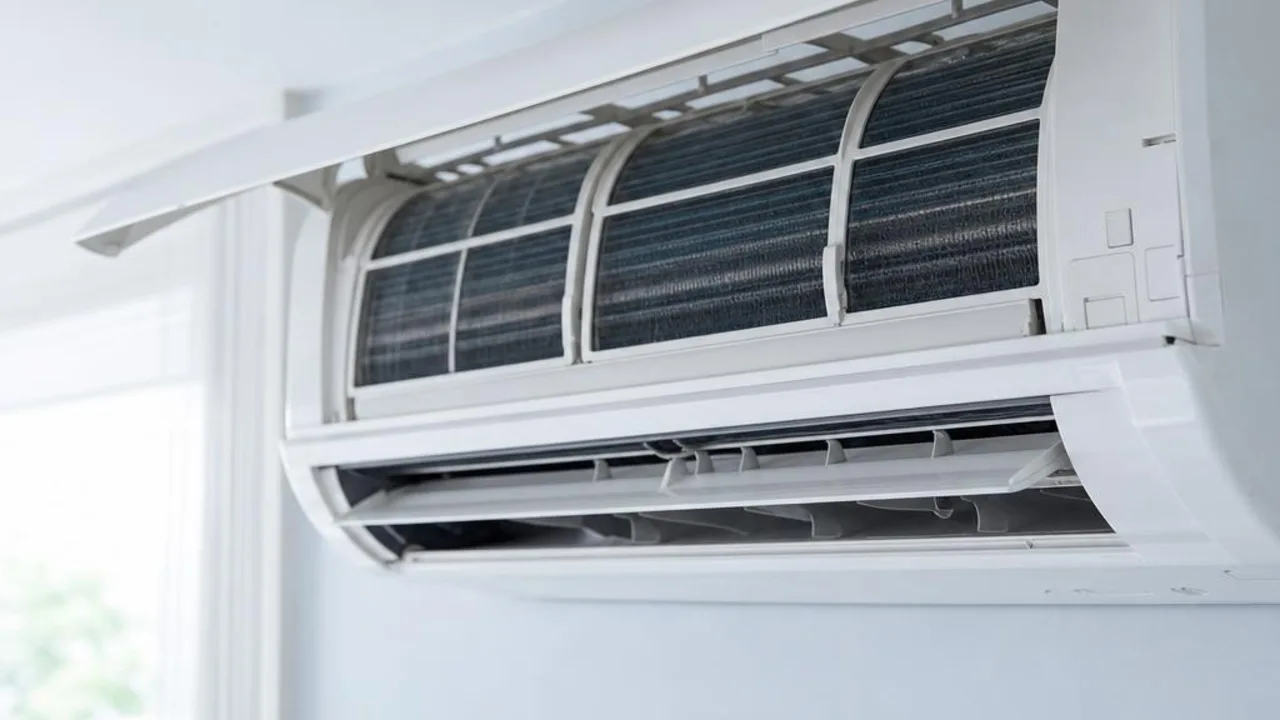
Is AC cleaner useful? Can you clean an AC with AC cleaner?
Contents
Is AC cleaner useful? Many people probably have this question. When an air conditioner that has not been used for a long time gives off a musty smell after being turned on, people often want to deal with it themselves first. AC cleaner can help with light dust removal and odour improvement, and it helps maintain airflow during operation, but its cleaning effect is limited and cannot replace professional AC cleaning services. Cleaner is an auxiliary tool and cannot fully remove deep internal dirt.
AC Cleaner Ingredients
Before buying an air conditioner cleaner, you should first understand its ingredients. Choosing a compliant product can help remove dust from the surface of the heat exchanger fins. When using it, care should be taken not to corrode the aluminium fins, and to ensure no chemical residue remains after cleaning.
AC cleaner ingredients mainly include surfactants, solvents, antibacterial and mite-removal agents, corrosion inhibitors and fragrances. Surfactants are mainly used to improve cleaning performance, and non-ionic surfactants are commonly used, often combined with anionic surfactants. To meet metal-cleaning and environmental requirements, AC cleaners generally use non-ionic surfactants. Among them, AMP, a fatty alcohol polyoxyethylene ether phosphate, has low foaming, strong soil removal on hard surfaces, good solubilising performance, stable properties and a mild scent. At the same time, because its structure is similar to natural emulsifiers, it causes less irritation to the body and is more easily biodegradable, so AMP has become mainstream.
For solvents, to avoid the cleaner itself causing secondary contamination to the AC, the solvent molecule should contain both ether and hydroxyl groups, and have good hydrophilic and lipophilic properties as well as strong solubility. In addition, the solvent should be low in toxicity, mildly irritating, leave no residue after evaporation, be readily biodegradable and have a light odour, so it can be widely used as a fragrance carrier.
For disinfectant and mite-control agents, effectiveness against organisms inside the AC unit, high efficiency, long-lasting performance and high safety for people all need to be considered. In most cases, targeted fungicides based on isothiazolinones are chosen for mould control, together with miticides that are effective against mites. As for corrosion inhibitors, AC cleaning agents use a water-based formula and are packed in metal cans, so the requirements for anti-corrosion performance are very high. As a result, alkaline adjusting agents are generally used, along with anodic/cathodic corrosion inhibitors, and the inside of the metal can is coated.
As for fragrances, manufacturers generally add different fragrances in appropriate amounts to optimise the product scent.
Is AC cleaner useful?
When an air conditioner is cooling, the surface of the cooling fins will condense moisture and become wet, making it easy for dust to stick. To thoroughly remove this dirt, an AC cleaner should have strong penetrating, dispersing, dissolving and emulsifying effects.
Filters, fan wheels and drain trays are parts where dirt easily builds up. In particular, if the internal fan is not cleaned regularly, dust will accumulate easily and there may be odour during operation. A spray-type AC cleaner with strong spraying power is suitable; this type does not need rinsing after use, and dirty water can drain out through the AC pipe. It is easy to use and simple to operate, but because the liquid can splatter, eye and floor protection must be prepared during cleaning.
As for the blades deep inside, they are difficult to clean by hand. After dust builds up, moisture can easily cause mould. Since the air from the air conditioner must pass through the blades, odour and dust may be carried out as well. A foam cleaner is suitable because it penetrates and coats surface dirt. The advantage of a foam cleaner is that you can clearly see it sticking to the blades, making it easier to confirm that every area has been sprayed evenly, but you still need to watch out for splashing during use.
In addition, due to the complex structure of AC units, even strong spray cleaners may not reach hidden corners during cleaning. If you want a deep-cleaning effect, choose an AC cleaning spray with a long nozzle so it can reach into gaps and remove dirt that is hard to access. In fact, most foam products also have this design. It is worth noting that if the nozzle hits the inside of the AC unit, it may cause damage, so extra care is needed during use.
Find professional help
Although AC cleaning products can provide some cleaning effect, the thoroughness of professional cleaning is more important. Seeking help from a professional team can ensure your air conditioner is cleaned and maintained comprehensively, removing deep-seated dirt, protecting equipment performance and air quality, and giving you a more comfortable living environment.
Related reading and services


Want to arrange AC cleaning or maintenance?
OPOExpert Air Conditioning provides residential and commercial AC cleaning and maintenance with clear pricing. Enquiry first or book online directly