
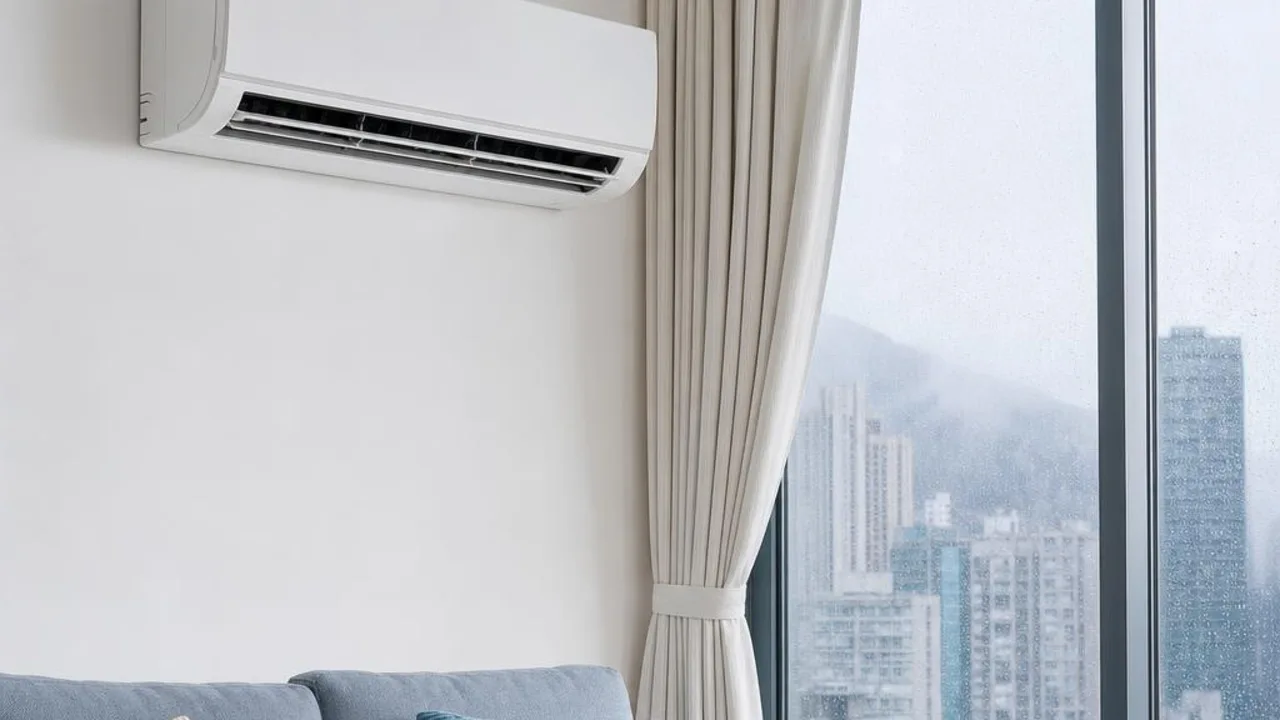
Running dehumidify mode for long periods and damp dirt buildup: limits of operating modes
Contents
Running dry mode for a long time does not mean the inside is already dry or clean, and you cannot conclude that mould must be present just because Dry mode was used. If there are visible stains, odour or abnormal drainage, the moisture source, dirt build-up and drainage condition should be checked separately.
How Air Conditioner Dehumidifying Mode Works and Changes in Indoor Humidity
Dehumidifying mode uses the evaporator to condense part of the moisture in the air, then drains it away through the drainage system; fan speed, compressor control and stop-start control vary by model. Normal condensation does not mean abnormal water pooling, and it cannot be used to infer the humidity or bacteria inside the unit.
Will running dry mode for a long time cause mould? The key is residual moisture after shutdown
There may be residual moisture after shutdown, but whether it stays damp depends on the model, drainage and environment. Without testing, it cannot be said that humidity instantly exceeds 80%, and body temperature cannot be used as the cause of water accumulation inside the unit.
Running fan mode before shutting down helps dry out internal moisture
If the original manufacturer provides an internal drying or cleaning function, complete the procedure according to the manual without cutting off power halfway through. Normal fan mode may help dry some surface areas, but it does not guarantee drying every part or eliminating microorganisms, and there is no universal 15 to 30 minute standard for all models.
Increase the set temperature moderately and avoid running at extremely low fan speed for long periods.
The set temperature and fan speed should match comfort and model requirements. You cannot say that setting it to 25 degrees or increasing the fan speed will blow the water away. Condensation water is mainly handled by the collection and drainage design; if dripping water, icing, or unusual noise continues, stop using the unit and arrange an inspection.
Keep up regular filter cleaning and arrange deep maintenance together
Inspect the filter according to the manual and the level of dust; washable and non-washable filter cartridges should be handled separately. Seeing black spots or smelling an odour does not confirm that contamination has reached the "core"; find the source instead of promising that deep cleaning will completely remove spores.
Seek help from a professional team
Before internal cleaning, verify the buildup, drainage, electrical protection, material compatibility and quotation scope. Cleaning can remove dirt, but it does not guarantee sterility, no odour, or that repairs are unnecessary; do not spray chemicals into the unit yourself, and if abnormalities remain, follow up with an equipment inspection.
Related reading and services
Need professional help?
Need to know about Residential air conditioning service? First check the service scope and arrangements, then provide the model and site details for enquiry