
Dealing with a midnight air conditioner leak
Contents
If the AC starts leaking at midnight, stop using it at once, protect nearby items from a safe position, and record the leak location and time. If water is near electrical points, a breaker trips, or there is a burning smell, do not touch wet switches, and do not dismantle pipes, adjust brackets or restart the unit repeatedly; arrange an inspection before deciding whether it needs cleaning or repair.
Common cause of midnight leakage 1: blocked drain pipe or drain pan
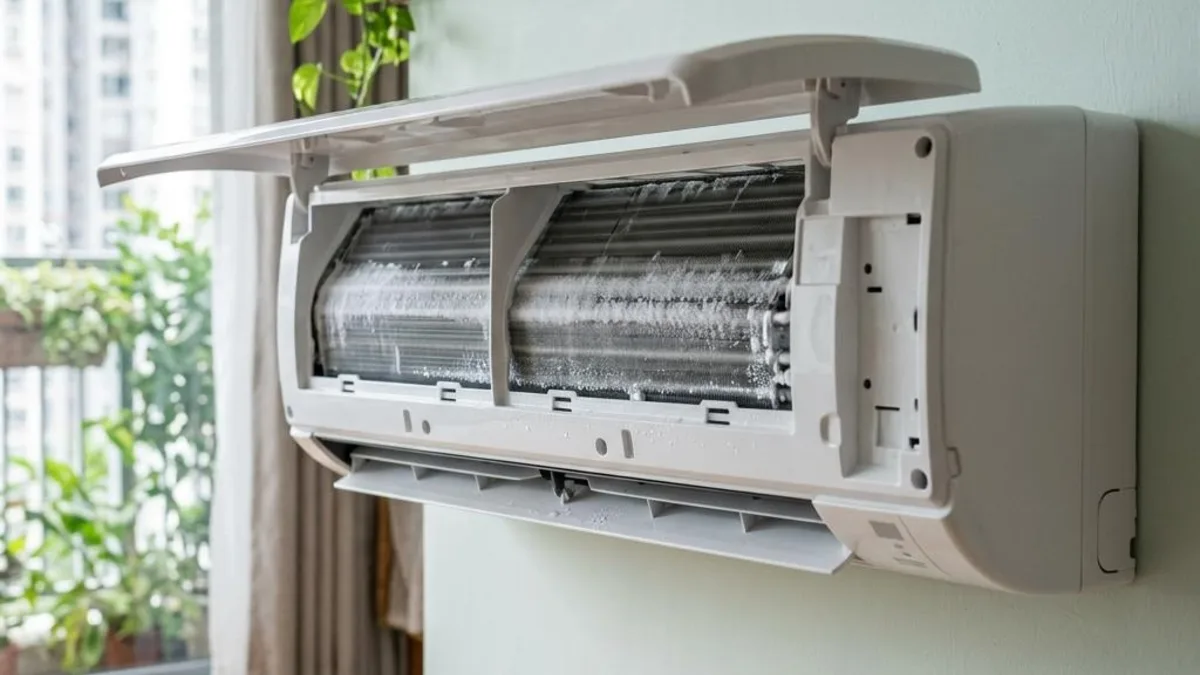
Air conditioners produce condensate during operation. Under normal conditions, this water is discharged outdoors through the drain pipe. However, because Hong Kong is humid, dust, mould, algae, or lint and other debris can easily accumulate inside the drain pipe and cause blockage. When water cannot drain smoothly, it may overflow from the indoor unit, especially after the unit has been running for a long time or some time after it is switched off, when water gradually builds up and causes nighttime dripping. Split-type air conditioners have smaller drainage openings, so this problem is more likely to occur. If the unit is not cleaned for a long time, the blockage will become more severe.
Common cause of midnight leakage 2: heavy dust buildup on the filter and evaporator coil
When the filter is full of dust, airflow is obstructed and the evaporator (cooling coil) becomes too cold, making frost more likely. When the frost melts at night, a large amount of water is produced. If drainage is not timely, it may drip from the air outlet or the bottom of the unit. Leaks are especially noticeable late at night because temperature changes are larger then, and long operating hours make the dust problem more obvious. This is more common in older units or air conditioners that have not been cleaned for a long time.
Common cause of midnight leakage 3: incorrect installation angle or refrigerant issue
If the indoor unit is not level during installation, or is tilted forward, water in the drain pan cannot flow to the drain outlet and may overflow. In some cases, insufficient refrigerant may also cause the evaporator to frost excessively, and excess meltwater may cause dripping. These problems are more noticeable when used for long periods at night, because they may not be obvious during short daytime operation.
Initial self-handling steps
1. Check the filter: If the filter has visible dust buildup, remove it, wash it, and reinstall it after it has dried.
2. Check drainage: If the drain pipe is blocked, do not dismantle it yourself. Contact a professional for cleaning as soon as possible.
3. Adjust the unit angle: Use a spirit level to check whether the indoor unit is level. If it is tilted, contact the installer to make minor adjustments.
4. Temporary emergency measure: Use a towel or a drip tray to catch dripping water and keep the floor dry.
Find professional help
If the leak does not improve after you have dealt with it yourself, or if you suspect complex issues such as refrigerant pressure, ageing parts, or a damaged drain pan, you should quickly find a professional AC cleaning and repair team. They have professional tools and high-pressure cleaning equipment to thoroughly remove stubborn blockages and mould inside the drain pipe, and to inspect the overall system condition. Professional service not only solves the immediate leak, but also helps prevent recurrence later. Choosing a team with strict technician training, official certificates, and after-sales support can give you greater peace of mind. Early action can prevent a minor issue from becoming a major repair, while maintaining cooling efficiency and indoor air quality.
Related reading and services
Need professional help?
Need to know about AC repair service? First check the service scope and arrangements, then provide the model and site details for enquiry