
Outdoor Unit Maintenance: Why Dismantling and Cleaning the Outdoor Unit Must Be Performed by an Insured Technician
Contents
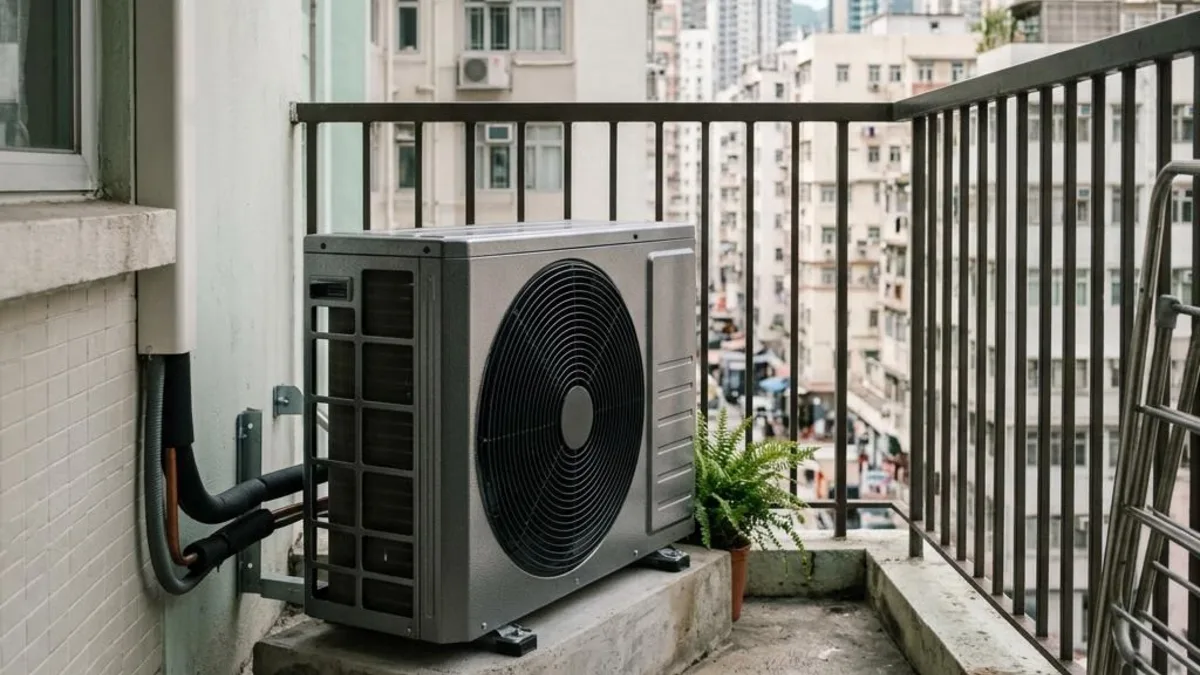
In the hot summer, air conditioning is an indispensable appliance at home. Many responsible owners regularly clean the indoor unit's dust filter, and some even hire technicians to clean the evaporator. However, the outdoor unit hanging on the building exterior or outside the window sill is often forgotten, exposed to wind, rain, and dust all year round.
In fact, the outdoor unit is the heart of the AC system. Once heat dissipation is blocked, electricity costs rise sharply and the unit's lifespan is shortened.
Before cleaning the outdoor unit, assess access, support, power supply, and surrounding protection. Exterior wall and high-level locations should not be handled by residents leaning out themselves. When booking, provide photos taken from a safe position so the actual work and whether extra work arrangements are needed can be confirmed.
1. The cost of a dirty outdoor unit: poor heat dissipation and soaring electricity bills
An AC unit works by absorbing heat through the indoor unit, transferring the heat to the outdoor unit via refrigerant, and then using a fan to expel the heat. If the metal cooling fins behind the outdoor unit are blocked by thick dust, lint, or even bird droppings, the heat cannot be dissipated effectively.
When poor heat dissipation occurs, the compressor must run at higher power to maintain the cooling effect, which directly leads to a significant increase in power consumption. In serious cases, the compressor may also activate its self-protection mechanism due to overheating and shut down forcefully, causing the air conditioner to cool unevenly and even leading to permanent compressor damage. Therefore, regularly cleaning the outdoor unit is key to maintaining energy efficiency.
II. Do not wash with water yourself: the deadly contact between water and electricity
Many tutorial videos online suggest owners spray water on the outdoor unit with a hose. This is extremely dangerous. Inside the outdoor unit are delicate inverter circuit boards, capacitors, and wiring terminals. Unless you are a professional, you will not know which parts need waterproof protection.
If water seeps into the circuit board, it may cause short-circuit damage to parts at best, and electric shock or fire at worst. In addition, the heat-dissipating fins are very thin and sharp; brushing them carelessly can easily cut your fingers, or flatten and deform the fins, further obstructing airflow and causing irreversible damage.
3. The seriousness of working at height: fall risk and legal responsibility
In Hong Kong, the vast majority of outdoor air conditioner units are installed on concrete ledges or metal brackets on the exterior wall of a building. Thorough cleaning often requires dismantling the casing, which means workers must lean half their body out of the window, or even work outside on the exterior wall.
This is a high-risk work-at-height job. Without a compliant safety harness and a secure fall-arrest attachment, there is an immediate risk of a fatal fall. In addition, if a screwdriver, cleaning agent or even casing parts are accidentally dropped during dismantling and cleaning and hit pedestrians or vehicles below, both the owner and the contractor may face serious criminal liability and huge compensation claims.
Why must it be carried out by insured professional technicians?
Based on the above risks, cleaning the outdoor unit goes beyond a simple cleaning service and is a professional job. The value of hiring insured technicians lies in the following three points:
First is third-party liability insurance and labour insurance. This is the most important protection. A properly run air-conditioning company will buy adequate insurance for its technicians. If a falling-object accident during cleaning damages a neighbour’s property, or a technician is injured, the insurer will cover the compensation. If you hire an unlicensed or uninsured handyman, then if an accident happens, the owner, as the employer, may have to bear the legal action and very large compensation on their own.
Second is scaffolding and high-altitude safety equipment. For outdoor units installed in hazardous locations, the technician will assess whether scaffolding is needed for safe work. Even if scaffolding is not required, they will still use industrial-grade safety harnesses and know how to find an approved tie-off point inside the home, such as a structural load-bearing wall, to ensure safety.
Finally, professional protection and cleaning techniques matter. Certified technicians are rigorously trained and know to wrap circuit boards and motors with waterproof materials after opening the casing, then use a dedicated cleaning machine set to the correct pressure for deep rinsing. They can break down and wash away dirt trapped deep in the fins while ensuring the water flow does not damage the components, and they will carry out a detailed test run after cleaning. Hiring a professional team is not only to restore the AC to its best condition, but also to protect the owner from unnecessary accident risks and legal liability.
Related reading and services

Need professional help?
Need to know about AC repair service? First check the service scope and arrangements, then provide the model and site details for enquiry