
Corporate air-conditioning cleaning procurement: service specifications, quotation, and document checklist
Contents
For corporate air-conditioning cleaning, first standardize the equipment list, the parts that can be cleaned, and the site conditions before inviting quotations. Comparing the total price for the same scope, downtime arrangement, and exclusions is more useful than comparing only the lowest unit price per outlet or per unit; document requirements should also be raised before confirming the booking.
Write the service scope clearly first to avoid different interpretations
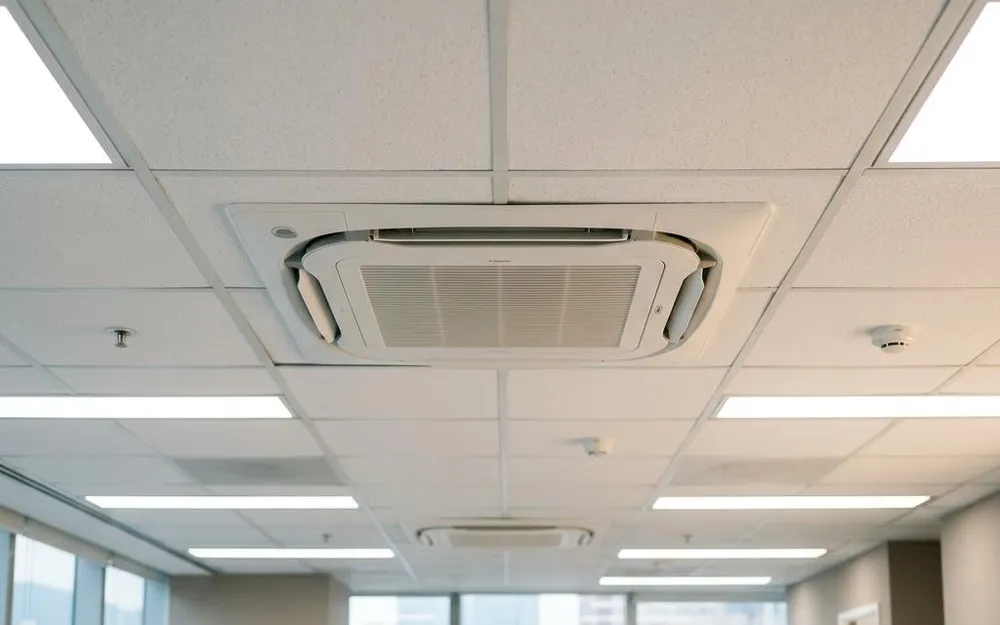
List the equipment by floor, area, and unit number, and record the model, quantity, inspection access, and safely visible locations. Four-way cassette units, fan coil units, ducted units, and a complete central system are not the same scope; do not count only the air outlets as the number of units.
Cleaning requirements should list checkable parts, such as filters, coils, fans, drain pans, and drainage handling. Which parts can be removed, which can be touched, and which require on-site confirmation should all be clearly distinguished; do not write the full system repair, outdoor unit, or deep duct cleaning into the basic cleaning scope as if everything is included.
Explain the site and access requirements together
Provide the building work application, access route, available shutdown period, ceiling height, and protection requirements for goods and computers. If management approval or special high-level arrangements are needed, let the quotation provider know first, so that different work is not added later after estimating based on a standard location price.
An administrator, facilities staff, or management office may designate one person to confirm the scope, separating who can approve the work, who is responsible for opening doors, and who accepts additional items. Do not remove ceilings, climb, or touch operating equipment yourself just to take photos.
Compare the full total price, not just the unit price
Check each model, number of units, actual cleaning procedures, drainage scope, downtime, and split-visit arrangements one by one before comparing the total amount. Fault inspection, parts replacement, outdoor work, or other add-on items should be listed separately; do not directly use a residential multi-unit price as a commercial procurement price.
The commercial price list may be used as a reference for the specified models; different equipment and special site conditions still need confirmation. Regular visit frequency does not mean deep dismantling and washing every time, and the work content for each visit and the number of visits in a year should be written separately.
- Same equipment and same unit-count basis
- Included parts, procedures, and drainage handling
- Excluded items and how additional work is confirmed
- Number of visits, time slots, and total quotation amount
Documents, invoices, and procurement process must be confirmed in advance
When asking, provide the company name, purchase order, invoice, work records, or the document list required by management, and confirm the available format and timing. Do not treat a request for documents as a promise that any specific certificate or third-party certification will be provided.
If insurance information, a specified insured amount, vendor registration, or other approvals are required, first check whether the requirements can be met, and do not arrange a non-changeable work time before confirmation. Payment methods, deposits, and payment timing are also subject to mutual confirmation and the current terms; do not assume monthly billing or credit terms have already been approved.
Acceptance follows the confirmed work; faults are followed up separately
Acceptance can be checked against the equipment number, completed parts, restored condition, and any test run that can be arranged, with inaccessible locations and pre-existing issues recorded. Agree on the format of photos and work records in advance, and do not describe ordinary cleaning records as air quality testing or legal certification.
If the test run reveals poor cooling, unusual noise, or water dripping, record the issue and when it appeared, then separate post-cleaning follow-up from any pre-existing fault. Cleaning cannot guarantee that every equipment problem will be eliminated, and any additional repair still needs its scope explained and consent obtained.
Common questions
Can corporate air-conditioning cleaning be quoted as an all-inclusive price by providing only the number of outlets?
Usually not enough. The actual units, model, inspection access, working parts, and access conditions should be confirmed; the number of outlets does not equal the number of equipment units or the scope of a whole system.
Do invoices, records, and certificates required for procurement have to be included?
The documents and formats that can be provided should be confirmed item by item before quoting; a document inquiry cannot be treated as a commitment to provide any specific certificate, accreditation, insured amount, or payment credit term.
Does each regular visit always include the same deep cleaning?
Not necessarily. Monthly, quarterly, half-yearly, or yearly refer to frequency; the actual inspection, filter cleaning, and deep cleaning work and number of times should be listed separately in the plan.
Reference sources and applicable scope
This article provides a preliminary guide only and does not replace an on-site diagnosis. Original manufacturer functions and operation apply only to the corresponding model; please refer to your own unit's manual. For fixed electrical installations, inspection should be arranged by a registered electrical contractor.
Related reading and services
- Commercial equipment and site information checklist
- Multi-branch cleaning coordination and branch-by-branch quotations
- Commercial air-conditioning cleaning price list and service scope
- Submit corporate quotations and document requirements
Service fees and booking
Need professional help?
Need to know about Commercial air conditioning service? First check the service scope and arrangements, then provide the model and site details for enquiry