
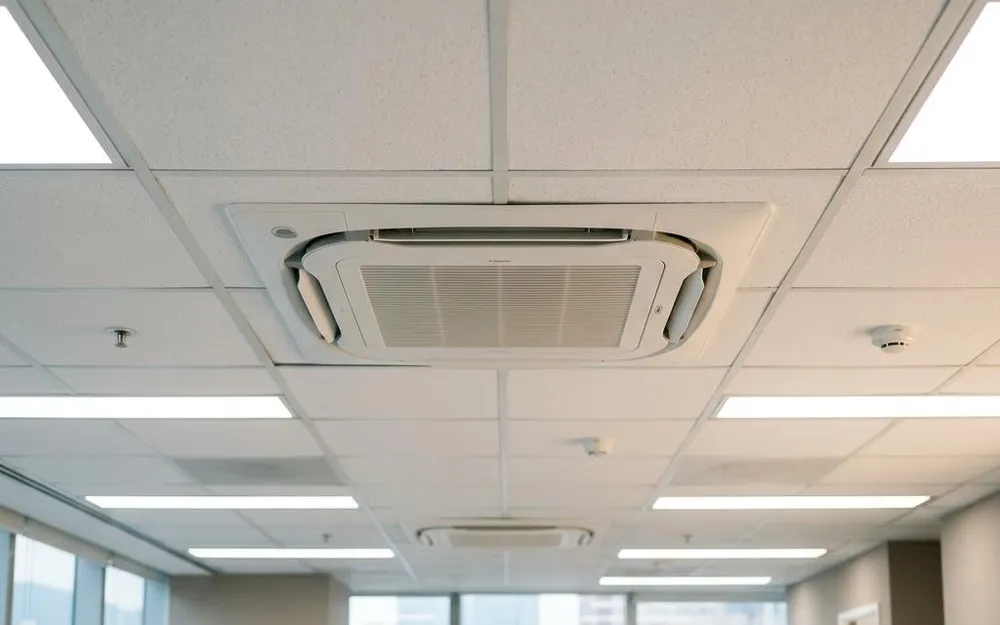
Solutions for dripping in four-way cassette air conditioners
Contents
Air conditioners are essential in modern life, especially in the hot summer. However, when your four-way cassette air conditioner starts leaking water, it can cause a lot of trouble, from reducing indoor comfort to creating a slipping hazard on the floor. Water leakage needs to be dealt with promptly. This article looks in detail at the causes of four-way cassette AC leakage and provides professional, detailed solutions.
Four-way cassette AC | Reason 1: condenser component condensation
One major cause of dripping in four-way cassette air conditioners is condensation on the condenser component. When the air conditioner is running, the condenser component lowers the temperature, which may cause condensation to form on its surface. When these droplets build up to a certain level, they will drip from the air conditioner. This is more noticeable in high-humidity environments.
Four-way cassette AC | Reason 2: blocked drain pipe
A blocked drain pipe is also a common cause of dripping in four-way cassette air conditioners. During operation, the unit produces a large amount of condensate, which is normally discharged through the drain pipe. However, if dirt or other material blocks the pipe, the water has nowhere to go and may drip from the unit.
Four-way cassette AC | Reason 3: incorrect AC installation
If your air conditioner is installed incorrectly, it may also cause dripping problems. For example, if it is not properly tilted, condensate may not flow smoothly into the drain pipe and may instead drip onto the floor. Also, if the drain pipe was not connected properly during installation, it may cause dripping.
Four-way cassette AC | Reason 4: overuse
Excessive operation may also cause water dripping from a 4-way air conditioner. When the air conditioner runs for a long time, a large amount of condensate may form. If the drainage system cannot remove this water in time, dripping may occur.
Now that we know the possible reasons why a four-way air conditioner is leaking water, let's take a look at how to solve the problem.
Four-way cassette AC | Solution 1: regular cleaning and maintenance
Regular professional cleaning and maintenance is the basic way to prevent drainage system problems. Keep the drain pipe clear and have a professional inspect the inside of the AC to avoid condensate buildup.
Four-way cassette AC | Solution 2: check and adjust the installation
If the cause of the dripping problem is incorrect installation, you may need to inspect and adjust the air conditioner installation to ensure it is slightly tilted so that condensate can flow smoothly into the drain pipe. Also check whether the drain pipe is correctly connected and whether there are any leaks or cracks.
Four-way cassette AC | Solution 3: use the air conditioner properly
Four-way cassette AC | Solution 4: seek professional help
If you have already tried the above solutions but the air conditioner is still dripping, professional help may be needed. The unit may have a deeper problem that requires professional repair service.
In summary, water leakage from a four-sided discharge AC can be caused by various factors, including condensation on the cooling coil, a blocked drain pipe, improper installation, and overuse. Through regular cleaning and maintenance, checking and adjusting the installation, proper use of the AC, and seeking professional help, you can effectively solve the leakage problem and ensure normal operation and indoor comfort.
Find professional help
Dripping in four-way cassette air conditioners may be related to the drainage system or the filter. Getting a professional team to inspect and repair it can quickly identify and solve the problem, ensure normal operation of the air conditioner, improve efficiency, and prevent your living environment from being affected.
Related reading and services

Need professional help?
Need to know about AC repair service? First check the service scope and arrangements, then provide the model and site details for enquiry