
Weak cooling: check dirt buildup, airflow, and refrigerant separately
Contents
Hong Kong’s summer weather is hot and humid, and coming home to blast the air conditioning is one of life’s great pleasures. But if one day after work you get home and even after half an hour the AC only blows out a weak cool breeze, or the whole room feels no different from an oven, it can be extremely frustrating. Many Hong Kong households’ first reaction is often: “Oh no, is it leaking refrigerant again? Do I need to pay a lot to have a technician top up the refrigerant?” In fact, a weaker cooling capacity may not be caused by refrigerant problems at all, and blindly asking for refrigerant top-up can end up being a waste of money. Today, as a professional AC cleaning team, we will start from routine AC maintenance to explain the real cause of poor cooling and show you how to deal with it wisely!
Even set to 16 and it still feels like a fan? Why is the AC getting less cold the more you use it?
In a hot and humid environment, when you get home and want instant cool air, you turn the temperature down to 16 degrees and set the fan speed to maximum, only to find that the air coming out feels almost the same as a normal standing fan, with no real cooling sensation at all. Many people think that running an air conditioner for a long time will naturally use up refrigerant, or that an older unit may no longer have enough refrigerant. In fact, an air conditioner is a sealed circulation system, and unless there is a pipe burst or a pinhole leak at a joint, refrigerant will not simply evaporate or decrease on its own. When you notice that the cooling effect is far worse than before, it is often because the heat-exchange efficiency inside the unit has become a problem, causing cool air to be trapped inside the unit or preventing heat from being discharged properly. Understanding this core point means you will not blindly look for refrigerant top-up as the only solution, and avoid wasting money unnecessarily.
Not just a gust of wind? The truth behind clogged filters and poor heat dissipation
Hong Kong has limited indoor space and air quality can be affected easily. AC units run day and night, drawing in large amounts of dust, grease and fine hair. These contaminants quickly build up on the filter, evaporator fins and even the outdoor unit fan, restricting airflow. To help you clearly understand the many possible reasons for weak cooling, we have put together the following practical comparison table:
Common causes of an air conditioner not cooling 🧊
Actual physical and operating performance ⚠️
Targeted correct handling methods 💡
Severe dust buildup on the dust filter 🧹
Thick dust blocks the airflow path, greatly reducing intake air volume and preventing cool air from coming out
Remove the dust filter regularly, rinse it with clean water and let it air-dry to keep airflow smooth
Mould on the evaporator aluminium fins 🦠
Dirt and mould block the heat dissipation gaps, causing the heat exchange efficiency to drop sharply and warm air to blow out
Arrange a professional AC cleaning team for high-pressure deep cleaning and disinfection
Poor outdoor heat dissipation ☀️
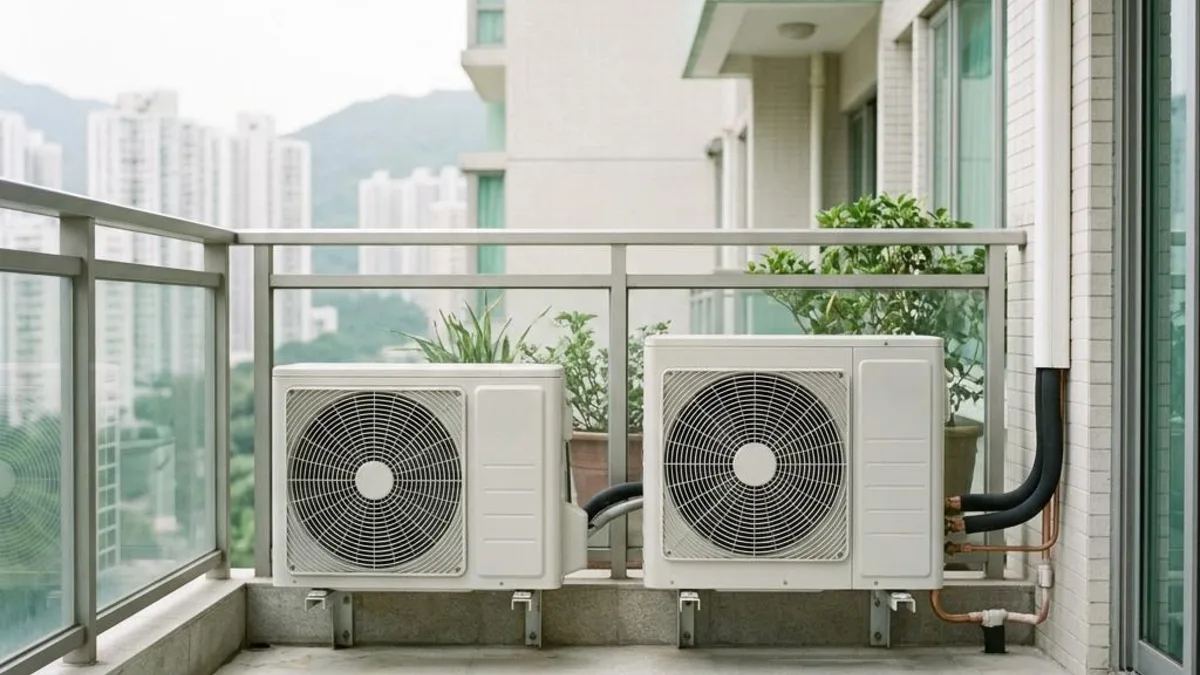
If the outdoor unit is blocked by debris or the heat-dissipating mesh is clogged with dust, heat cannot escape and the unit may trip.
Clear clutter around the outdoor unit to ensure good ventilation, and clean the condenser grille if necessary
The comparison above shows that the cause of weak cooling is often hidden in overlooked cleaning details in daily use, rather than being solely a refrigerant issue.
Top up refrigerant blindly and pay an IQ tax? Balancing DIY cleaning with professional inspection
When your home AC is not performing well, it is important to distinguish between safe DIY tasks and jobs that require professional skills to avoid wasting money and time.
- 💡 Safe DIY scope: daily cleaning and surface maintenance Scenario: You notice a thin layer of dust on the filter, or some buildup on the panel, and the air from the AC has a slight dusty smell. Action: Remove and wash the filter yourself every two weeks, use a soft-bristle brush to clean the outer casing, and keep the air outlet clear.
- 💡 Professional scope: deep cleaning and system pressure testing Scenario: Even after cleaning the filter, the AC still feels slightly warm, the air outlet gives off a strong musty smell, or frost appears on the copper pipes of the outdoor unit. Action: Do not open the internal unit yourself or blindly spray products bought off the shelf. Contact a professional technician to inspect system pressure with professional tools and carry out high-temperature steam cleaning.
Is routine AC maintenance done properly? Tips to extend service life and avoid sudden breakdowns
People in Hong Kong are busy and often only rush to deal with AC problems when the unit breaks down. In fact, proper routine maintenance can greatly reduce the chance of failure. For example, when the season changes, do not seal the unit away immediately after use; regularly run fan mode to dry internal moisture and reduce mould growth. During daily use, avoid keeping the temperature extremely low for long periods (such as 16 degrees). Keeping it at 24 to 26 degrees and using it with a fan can save electricity and reduce wear from compressor overload. In addition, regularly check power supply stability and whether the drain pipe is blocked to prevent backflow and leakage, which is also an important part of keeping the air conditioner running efficiently. Good daily maintenance habits are what help your air conditioner get through many summers with you.
Seek help from a professional team
If you have cleaned the filter but the AC still cannot cool properly, or if you suspect more complex problems such as pipe leaks or compressor failure, do not handle it blindly. Leave the professional repair, AC cleaning and system maintenance work to a specialist team in this field. As a team that understands the pain points of Hong Kong homes, we have professional unit-cleaning equipment, eco-friendly chemicals and experienced technicians who can accurately identify the root cause of poor cooling and provide efficient and safe cleaning and repair solutions. When you want your home AC to blow strong cool air again and help you enjoy a fresh and comfortable summer, professional support can make the whole process far more efficient and help you handle all AC problems with ease.
Frequently Asked Questions (FAQ)
Q1: If an air conditioner has been running for a long time but still does not cool, do I really need to call a technician to add refrigerant immediately?
A: Not necessarily. In most cases, an AC that is not cooling well is caused by a heavily dust-covered filter or evaporator, which lowers heat exchange efficiency. Unless there is a damaged pipe causing refrigerant leakage, blindly adding refrigerant often will not solve the root problem. It is recommended to clean the filter first or seek a professional inspection.
Q2: How often should a full AC clean be done? Do store-bought AC cleaning sprays work?
Sprays, water or foam alone cannot be judged by appearance to see whether they are suitable for the unit’s internal materials. The concentration of cleaning products, contact time, electrical protection and wastewater collection must be assessed according to the manufacturer’s requirements and site conditions. Residents are not advised to spray-clean the inside themselves, and not all products should be described as definitely corrosive.
Q3: If the air from the air conditioner has a mouldy smell, does that mean mould has formed inside? How can it be solved?
A: The smell may be related to dampness, dirt buildup, drainage, or other sources, and smell alone cannot confirm the amount of bacteria or mould. Filter maintenance is not the same as internal cleaning; if the odour persists, arrange an assessment first, then decide which parts need cleaning and whether other treatment is needed. We do not guarantee that chemicals or high-pressure work will cure every cause.
Related reading and services
Need professional help?
Need to know about Residential air conditioning service? First check the service scope and arrangements, then provide the model and site details for enquiry