
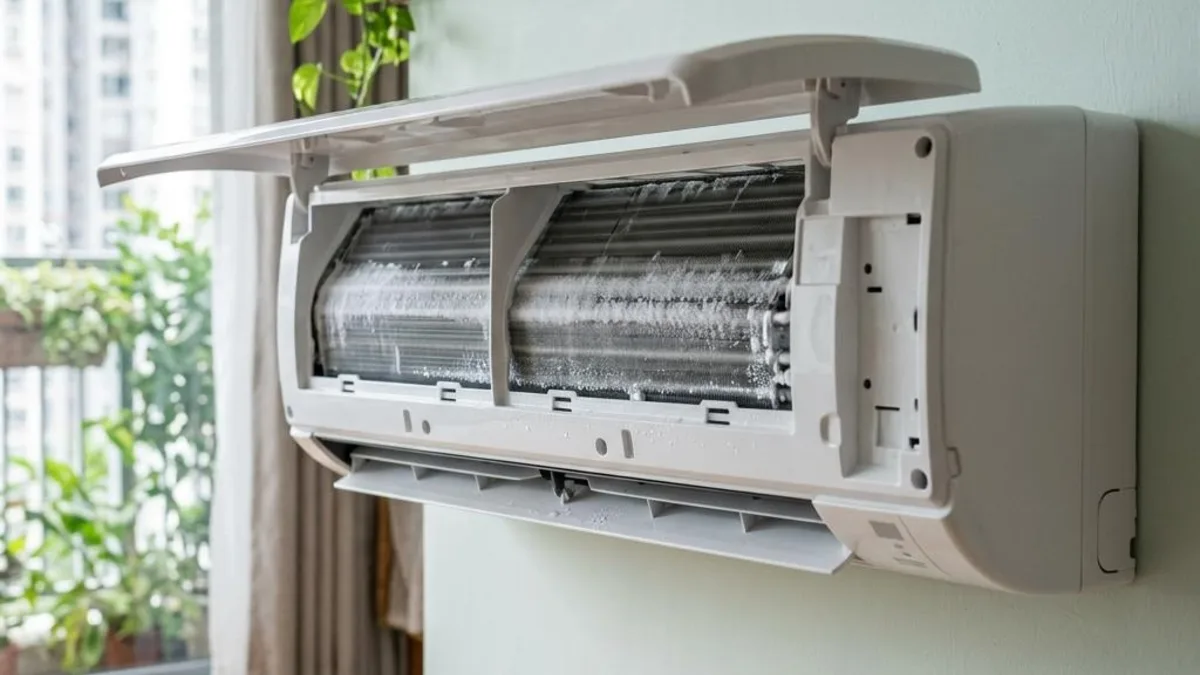
Six Causes of AC Dripping: Blockages, Cracks, Installation and Condensation
Contents
Dripping is a symptom, not a fault name. Whether the water appears from the panel, pipe or bottom of the unit helps narrow the inspection direction, but it still needs to be confirmed according to the model and the site conditions. Do not assume every dripping case means the AC is simply too dirty.
1. A blocked drip tray or drain line
Dirt, debris, bent pipes or insufficient drainage slope may prevent condensate from draining properly. The affected area must be identified first; do not assume the problem is solved just by pouring water into the pipe.
Do not use high-pressure water, corrosive drain cleaners, or metal tools to probe into the equipment yourself; drain cleaning and repairing damaged parts are different tasks.
II. Drain pipe or drip tray damage
Ageing, cracks and connection issues can cause water leakage during normal drainage. Pipe material, environment and workmanship vary, so there is no fixed rule that all PVC drain pipes expire after five years.
Whether the tray, piping or connection needs to be replaced must be assessed based on damage and accessibility, and a single photo does not confirm that all works are included.
3. Unit fixing and installation conditions
If the unit body is tilted, loosely fixed, has a drainage route problem or an existing installation issue, it may affect water collection and drainage. Window units and split units have different installation requirements; confirm according to the manufacturer's specifications.
Do not move the unit yourself, adjust the bracket, change the base angle, or drill a drain hole. Work at height, support, or reinstallations should be arranged by suitable personnel.
4. Drain pump or related control fault
For equipment with a drain pump, check the pump, sensor, power supply, and discharge piping. Not every AC has a pump, and a leaking unit cannot simply be fixed by replacing the pump.
V. Water dripping after ice melts
Blocked airflow, fan faults, or cooling system abnormalities may all be related to icing; after defrosting, increased water volume does not prove refrigerant leakage. Do not keep restarting, pry off ice, or use heat to melt it.
Stop cooling first and arrange an inspection based on safety conditions to distinguish between cleaning, fan and refrigerant system issues.
6. Pipe insulation and surface condensation
Cold surfaces may condense moisture when exposed to humid air. Insulation defects, joints or environmental conditions need to be checked. Condensation may also wet or damage nearby items, so it cannot be said to be harmless in all cases.
Stop using it first, then record the location
If electrical parts get wet, there is a burning smell, smoke, or a breaker trips, stop using the unit. Do not touch any wet switches. Take photos from a safe position showing the source of the drip, the model, and the error code, then follow the current inspection schedule to confirm the handling.
These six causes are a diagnostic classification, not a self-diagnosis checklist; cleaning, clearing blockages, parts replacement and installation corrections cannot replace one another.
Related reading and services
Reference sources and applicable scope
This article provides a preliminary guide only and does not replace an on-site diagnosis. Original manufacturer functions and operation apply only to the corresponding model; please refer to your own unit's manual. For fixed electrical installations, inspection should be arranged by a registered electrical contractor.

Need professional help?
Need to know about AC repair service? First check the service scope and arrangements, then provide the model and site details for enquiry