
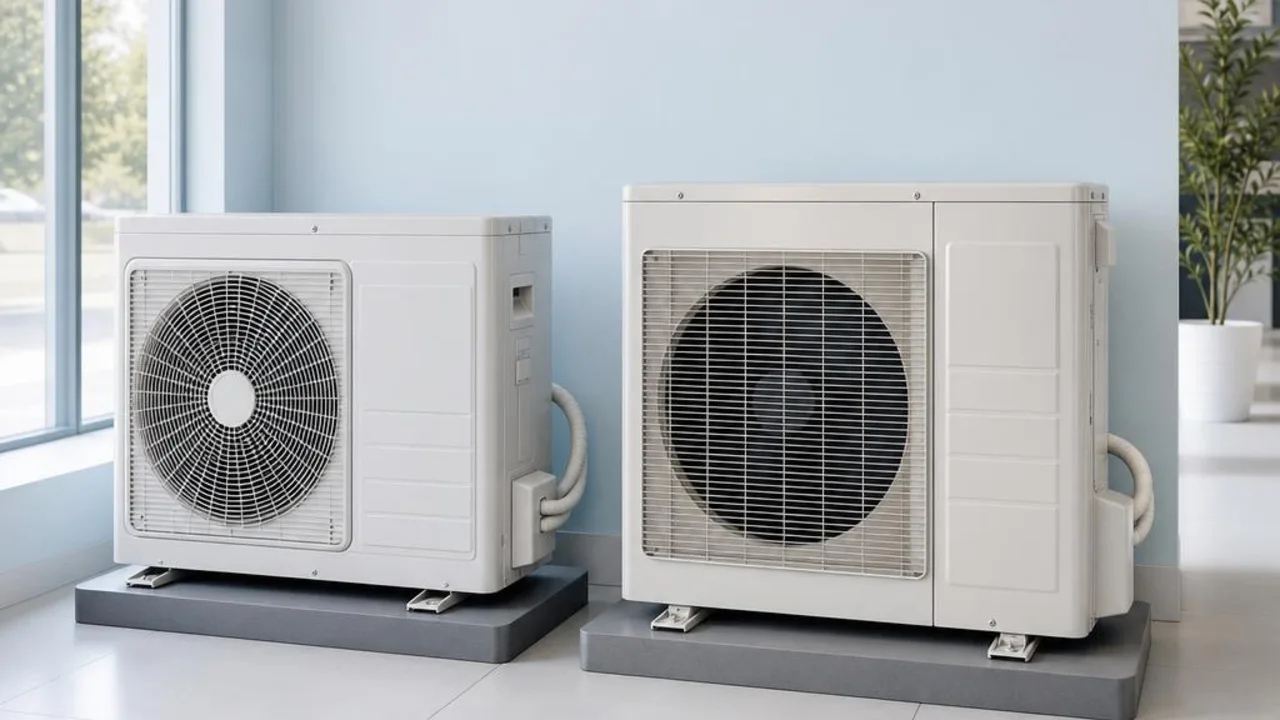
Fixed-speed AC pros and cons | In-depth exploration
Contents
Air conditioners play an important role in many homes and business premises, especially during the hot summer. When discussing air conditioner types, fixed-speed air conditioners and inverter air conditioners are two common choices. In this article, we will focus on the advantages and disadvantages of fixed-speed air conditioners to help you make an informed purchase decision.
Fixed-speed AC pros and cons | Basic principles
A fixed-speed AC, also known as a constant-speed AC, operates in full-speed or fully off mode. When turned on, it runs at full speed until it reaches the preset temperature. Once that temperature is reached, it stops running and will only restart when the indoor temperature rises to a certain level.
Fixed-speed AC pros and cons | Advantages
Here are some of the main advantages of fixed-speed air conditioners:
Lower initial purchase cost: fixed-speed air conditioners usually cost less to buy than inverter air conditioners. This is a major advantage for budget-conscious consumers, especially those who only use air conditioning in summer.
Simple to maintain: fixed-speed air conditioners have a simpler structure than inverter air conditioners and contain fewer electronic components, which usually means lower repair and parts replacement costs.
Rapid cooling: as fixed-speed air conditioners run at full power immediately after startup, they can quickly lower the indoor temperature. This is especially useful in hot summer weather.
Pros and cons of fixed-frequency AC units | Disadvantages
However, fixed-speed air conditioners also have some possible drawbacks:
Higher energy consumption: a fixed-speed air conditioner consumes full-power electricity while running, regardless of the current cooling demand. This is different from an inverter air conditioner, which can adjust its operating speed as needed and thereby save energy.
Greater temperature fluctuations: Because a fixed-speed air conditioner stops running once it reaches the set temperature, then starts again when the indoor temperature rises, the room temperature may fluctuate more.
Impact on lifespan: Frequent start-stop cycles may cause mechanical wear to the compressor, which is also a factor when considering long-term operating stability.
Higher noise: Fixed-speed air conditioners may produce louder noise when running and stopping, especially during startup and shutdown, which may be bothersome for people sensitive to noise.
Poor adaptability: A fixed-frequency air conditioner cannot automatically adjust its operating speed according to changes in indoor temperature and humidity like an inverter model, so its actual performance may be less flexible and may not meet special cooling needs.
Overall, choosing a fixed-speed AC depends on your specific needs and budget. Fixed-speed ACs have a lower upfront cost, are simple to operate, and can cool quickly, making them a good choice for some users who only use AC in summer. However, if you care about long-term energy use, temperature stability, and service life, you may want to consider other options such as inverter ACs.
Related reading and services

Want to arrange AC cleaning or maintenance?
OPOExpert Air Conditioning provides residential and commercial AC cleaning and maintenance with clear pricing. Enquiry first or book online directly