
Can air-conditioners be cleaned as usual during typhoons and rain in August? Exterior wall safety and work considerations in severe weather
Contents
During Hong Kong's hot August summer, typhoons and heavy rain often reach their peak. Seeing the weather turn worse with strong winds and heavy rain, many people naturally worry about a pre-booked air conditioner cleaning service, fearing that bad weather may affect work safety or home protection. In fact, arranging air conditioner cleaning on a stormy day involves complex issues such as high-rise exterior wall safety, electrical insulation protection, and indoor environmental limits. By objectively assessing meteorological risks, structural safety and site conditions, and taking appropriate postponement or preventive measures, you can make a wise choice between maintaining air-conditioning performance and ensuring personal safety.
Safety risks of exterior wall high-altitude work in heavy rain and strong winds
Whether work can be carried out in windy or rainy weather depends first on the weather, traffic, and the actual site, especially exterior walls, high-level work areas, and slippery work locations. Leaning out of a window cannot be treated as a normal part of AC cleaning, and rainproof gear does not guarantee safe work in severe weather; if necessary, both sides should agree to reschedule.
Environmental limits to waterproof barrier failure on window frames and the risk of indoor leakage
In addition to the safety of workers on the exterior wall, cleaning the air conditioner during typhoon and rain weather also poses a potential threat to the indoor environment. The standard cleaning process usually requires a high-pressure washer or a dedicated cleaning sprayer to flush the evaporator and blower wheel with plenty of water. In normal weather, this wastewater will drain away smoothly through the drain hose. However, when it is pouring outside, the window must stay open for a long time to allow the technician to work or pass hoses through, and rainwater may splash directly indoors. At the same time, if the waterproof seal between the air conditioner and the window frame has aged and developed tiny cracks, strong wind and heavy rain combined with the water pressure during cleaning can easily cause rainwater to backflow or wastewater to seep into the wall, greatly increasing the chances of a slippery floor or mouldy walls.
Weather assessment and self-check points before AC cleaning
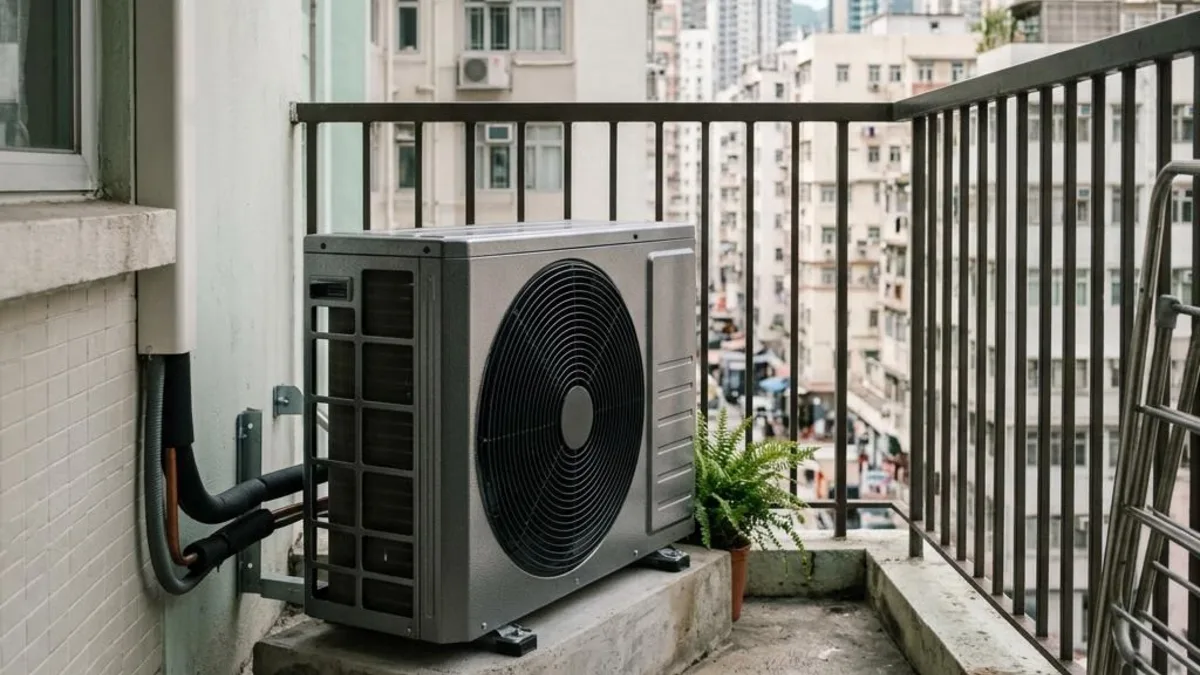
When a pre-booked cleaning date is affected by severe weather, users may wish to first carry out a simple self-check to assess the current conditions objectively. First, closely monitor the latest weather warnings issued by the Hong Kong Observatory. If a Red or Black Rainstorm Warning Signal, or a No. 3 Strong Wind Signal or above, is in force, the objective conditions for outdoor work usually no longer exist. Second, check whether the air conditioner is installed in a fully exposed balcony or on a high exterior wall. If it is in a high-risk location that will be directly affected during wind and rain, the risk of carrying out the work will increase significantly. Through this self-check of the details, users can understand the situation before contacting the technician and reasonably assess whether the appointment needs to be rescheduled.
Effectiveness balance assessment for rescheduling maintenance and operating during the transition period of parts
Many users worry that if AC cleaning is postponed because of weather, the unit will keep accumulating dust and mould. In fact, choosing to delay cleaning in bad weather is a safety and risk-control decision. Postponing the service is to protect both workers and household safety. When weighing home safety against cleaning needs, safety is always the top priority.
Seek help from a professional team
After a typhoon, first explain whether there is water ingress, unusual noise, power supply issues, or installation abnormalities so the service staff can confirm the inspection scope and work scope. Not every unit needs deep cleaning after rain, and cleaning cannot be guaranteed to fix typhoon damage or restore full performance.
Related reading and services

Need professional help?
Need to know about Residential air conditioning service? First check the service scope and arrangements, then provide the model and site details for enquiry