
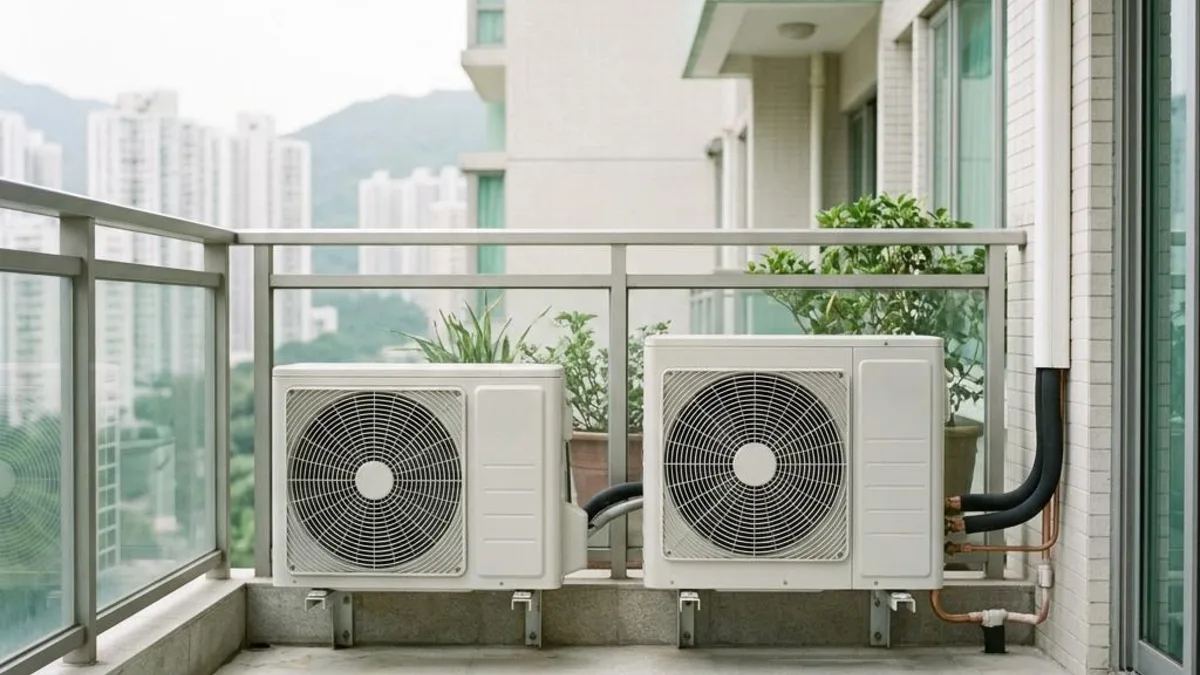
Oil stains on AC piping: whether it is refrigerant leakage and what to know before inspection
Contents
Oil stains near pipe joints, valves, or insulation materials may be a clue that inspection is needed, but a single photo cannot determine a serious refrigerant leak, an imminent compressor failure, or that the unit must be replaced.
What is the relationship between oil stains and refrigerant oil?
The cooling system uses refrigerant and compatible lubricating oil; some leak situations may leave oil traces or dust sticking nearby. But external oil stains, old construction residue and the like can also look similar, so oil traces are not proof of a confirmed leak point.
Do not reach in to touch oil stains, remove the insulation layer or operate valves. Take photos from a safe position, keep a record of the location and any changes, and leave the judgement to a technician.
Which signs are worth recording together?
Record whether it is not cooling, icing up, changes in operating time, error codes, and whether any oil stain has just appeared. These signs may also have other causes; lower refrigerant does not necessarily produce the same symptoms every time.
If there is a burning smell, smoke, repeated tripping, or obvious abnormality, stop using the equipment. If refrigerant leakage is suspected, avoid open flames and do not try to detect the leak yourself; handle it according to the original manufacturer's safety instructions.
Why not just top up the refrigerant?
A normally sealed system is not a device that loses refrigerant on a fixed annual basis. If there is a genuine leak, simply topping up without addressing the cause may allow the problem to recur; first confirm the fault and scope of work before deciding whether to top up.
Oil stains do not prove that other repairers were dishonest, and they do not mean we can promise a permanent fix or that every hidden leak point will definitely be found after repair.
Scope of professional inspection and repair
The inspection method, leak detection tools, pressure test, pipe repair, vacuuming and refrigerant charging arrangement must be determined according to the system, refrigerant and original factory specifications. Not every job uses the same equipment or additives.
This is not a tutorial for DIY pressure testing, welding, mixing refrigerant or opening valves. Before any repair, confirm accessible areas, safe working conditions and whether there are any additional hidden works.
Separate inspection, repair and top-up costs clearly
For current prices for adding refrigerant and whether additional work is required, please see value-added services and repair rates. Leak testing, pipe repair, or high-level work should not be assumed to be included in an add-refrigerant price.
Provide the brand and model, the type of unit, district, fault condition and photos taken from a safe position so we can confirm the inspection arrangement first; the actual scope and price will be confirmed by customer service and the on-site assessment.
Related reading and services
- AC fault inspection and repair arrangements
- Current pricing and scope for AC add-on services
- Back to AC encyclopedia
Reference sources and applicable scope
This article provides a preliminary guide only and does not replace an on-site diagnosis. Original manufacturer functions and operation apply only to the corresponding model; please refer to your own unit's manual. For fixed electrical installations, inspection should be arranged by a registered electrical contractor.
Need professional help?
Need to know about AC repair service? First check the service scope and arrangements, then provide the model and site details for enquiry