
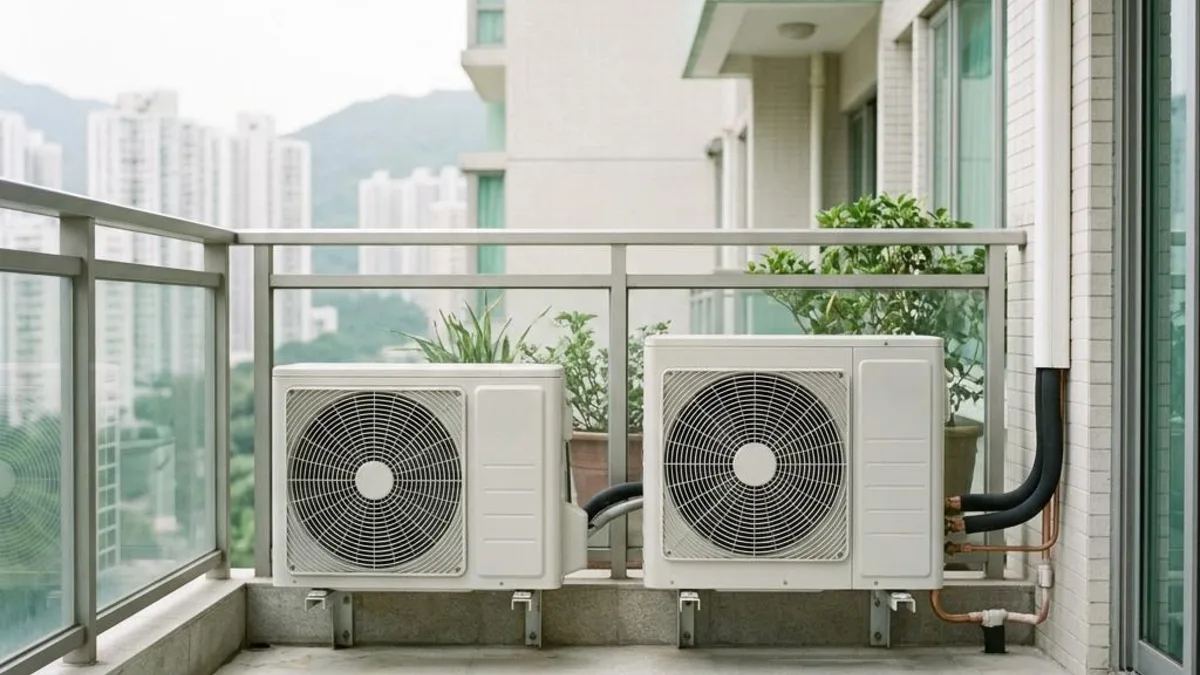
Does an air conditioner that is not cooling need refrigerant? Check the cause first; do not judge by sound or smell
Contents
An air conditioner not cooling does not mean it needs refrigerant. A properly sealed system should not run out naturally over time. First distinguish settings, airflow, heat dissipation, controls, or system faults, then let a technician determine whether refrigerant charge and leaks are involved.
During cooling, refrigerant absorbs heat in the indoor evaporator, releases heat at the outdoor condenser after passing through the compressor, and then circulates through the expansion device. Heat is not turned directly into cold air at the condenser, and residents do not need to open the pipe route for routine maintenance.
The following signs should be recorded and checked, but none of them alone can confirm that refrigerant needs to be added:
- Poor cooling or slow cooling: first check the mode, airflow and actual environment. If the abnormality continues, inspect the equipment; do not judge refrigerant shortage based only on how cool the air feels.
- Unusual sounds or vibration may involve the motor, fan, support, airflow or other issues. A humming sound alone cannot be taken to mean refrigerant is insufficient or pressure is too high. If abnormal, stop using it and arrange an inspection.
- Icing: During cooling, the indoor evaporator or related piping may freeze due to airflow, control, or system issues; it should not be described as condenser overcooling in every case. Stop cooling and do not chip off the ice or pour hot water over it.
- Odour: you cannot confirm a refrigerant leak by smelling it, and do not lean close to the pipe opening to sniff. If there is a strong smell or a suspected leak, stop using the unit and arrange for appropriate personnel to inspect it, and handle it according to on-site safety conditions.
Refrigerant work involves pressure, الكهرباء and possible flammability risks, so residents should not connect gauges, open valves or refill it themselves. Repairs must be handled according to the model, refrigerant type and actual inspection results, not by deciding the amount to add from a symptom list in advance.
If a leak is confirmed, first confirm the leak point, repair and testing arrangements, then assess refrigerant charging according to the manufacturer's requirements; simply adding refrigerant cannot fix a leak. The cleaning quotation and refrigerant repair work must also be confirmed separately.
Enquire about TimesProvide the model, when the fault started, and whether there is dripping water, icing, or flashing lights at the same time, so staff can judge the inspection scope; no symptom does not mean the system must be opened routinely to check pressure.
Related reading and services
Need professional help?
Need to know about Residential air conditioning service? First check the service scope and arrangements, then provide the model and site details for enquiry